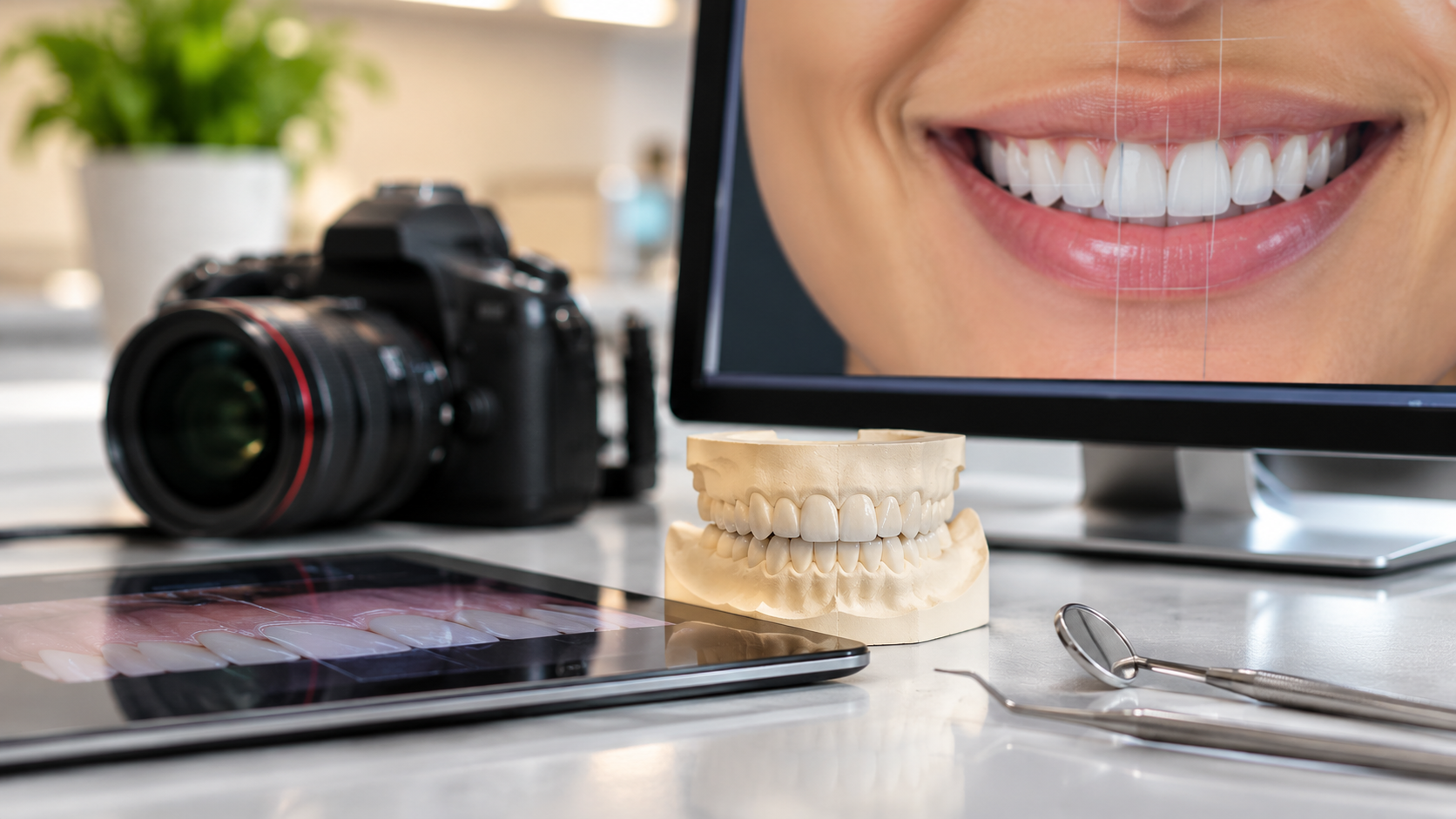
In esthetic dentistry, we are constantly surrounded by beautiful final results: case presentations, social media, and continuing education courses. You do not have to look far to find impressive veneer cases.
And I understand the appeal; veneers can be incredibly transformative when they are planned and executed well. What those final photographs rarely show, however, is everything that happened before the preparation appointment.
This is the fourth article in my photography series on smile design and facially driven dentistry.
- In the first article, I discussed why photography has become essential in modern practice.
- In the second, I focused on how I use photography to evaluate incisal edge position.
- In the third, we looked at gingival architecture and axial inclination.
This time, I want to focus on the step that supports all of those decisions: diagnosis.
The success of an esthetic case is determined long before a veneer is bonded. When the diagnostic phase is rushed, even technically excellent dentistry can fall short of the result the patient expected, and in some cases it can fail altogether.
The Seduction of the Solution
Patients often come into our offices already asking for veneers. They have looked online, seen transformations they like, and arrived with a fairly clear picture of what they think they need. It is easy for us as clinicians to move directly into that conversation.
But when a patient asks for veneers, they are often describing the outcome they want rather than the treatment they actually need. They want to feel more confident, they want to smile without thinking about it, and they want their teeth to look healthier, brighter, straighter, or more balanced.
Veneers may ultimately be the best way to accomplish that, but they may also be only one part of the solution, or not the right solution at all. Our responsibility is to figure that out before treatment begins.
Diagnosis Is Dentistry
I have seen patients invest significant time and money in porcelain only to end up disappointed with the result. In many of those cases, the problem was not poor ceramics or inadequate preparations; the problem started earlier. Maybe gingival inflammation was never fully addressed; maybe the teeth were significantly malpositioned, but the restorative plan attempted to compensate for that position rather than correct it; or maybe the incisal edge position was chosen chairside based on what seemed to look good in the moment rather than being evaluated systematically in the face or based on the occlusion. Each of those decisions can affect the final result.
A thorough diagnostic process is not about adding unnecessary appointments or making treatment more complicated. It gives us the information we need to make better decisions and gives the final restorations the best opportunity to succeed esthetically, functionally, and biologically.
What a Proper Esthetic Diagnosis Includes
In my practice, I approach every esthetic consultation with the same basic diagnostic framework, even when the case initially appears straightforward. That consistency matters because many of the issues that complicate esthetic treatment are easy to overlook when we assume a case is simple. A complete esthetic diagnosis should evaluate several areas.
- Periodontal health. Healthy tissues are the foundation of esthetic dentistry. Active inflammation, bleeding, unstable periodontal conditions, or bone loss need to be understood and managed before definitive restorative treatment begins.
- Occlusal stability. We need to understand how the patient functions. Are there signs of parafunction, wear, fractures, muscle symptoms, or joint concerns? A beautiful restoration placed into an unstable occlusal environment may be at risk from the first day.
- Incisal edge position. As I discussed in a previous article, incisal edge position is a facially driven decision. It needs to be evaluated in relation to the lips, smile dynamics, facial proportions, phonetics, and the overall composition of the smile.
- Gingival architecture and axial inclination. Are the gingival margins harmonious, are the zeniths positioned appropriately, and do the long axes of the teeth create a natural progression? Small discrepancies in these areas can have a major influence on whether the final dentistry feels natural.
- Tooth structure and preparation risk. How much enamel is available, and are there existing restorations? Is there erosion, wear, or previous endodontic treatment, and what are the pulpal considerations? Understanding the existing tooth structure helps determine how conservative we can be and whether a veneer is even the most appropriate restoration.
The goal is to understand the entire system before choosing the restorative solution.
Photography Makes the Diagnosis Visible
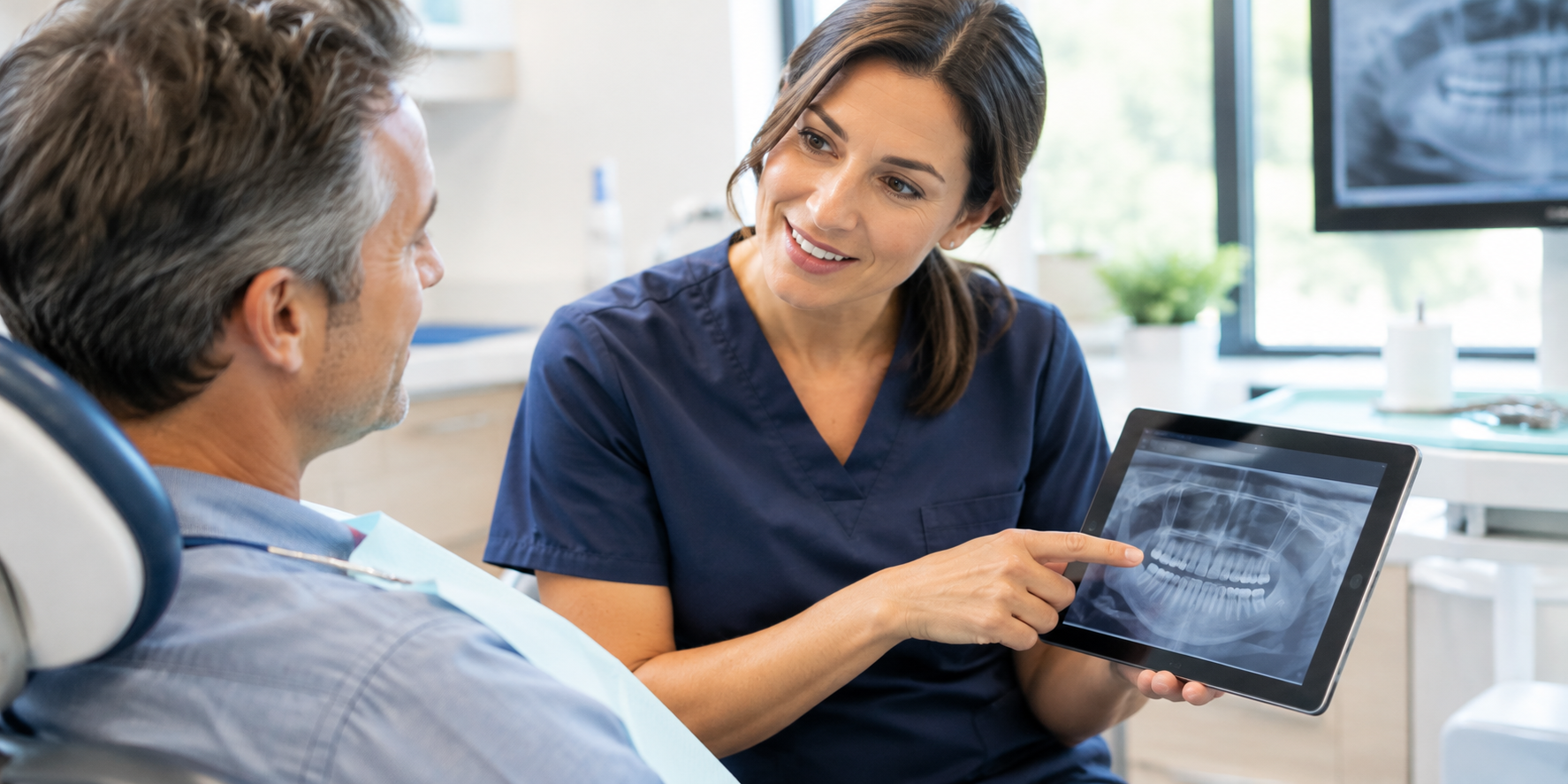
This is where photography becomes indispensable. At chairside, our attention is naturally drawn to individual teeth, but when we review well-composed photographs on a large screen, we begin to see relationships. Asymmetries become easier to recognize, gingival discrepancies stand out, and axial inclinations become more obvious, while incisal edge position can be evaluated in the context of the lips and face rather than in isolation. Photography gives us the ability to stop the clinical moment and study it, which is incredibly valuable.
When I sit down with a patient and review their diagnostic photographs, I often notice details that were much less obvious during the clinical examination. The patient also begins to understand what I am seeing, and that shared visual reference changes the consultation.
Instead of simply telling a patient that one gingival margin is higher, or that a tooth is tipped, we can show them. The conversation becomes easier to understand, and treatment recommendations begin to make more sense. Patients then own the treatment, especially if they opt out of recommended treatment like changing gingival heights.
Photography also creates a valuable diagnostic record. When questions come up later regarding why a particular decision was made, the photographs provide context.
The Interdisciplinary Conversation Starts at Diagnosis
One of the most important outcomes of a comprehensive diagnosis is recognizing when restorative dentistry should not be the first step.
- If the gingival margins are significantly uneven, periodontal treatment may need to occur before preparation.
- If tooth position or axial inclination is compromised, orthodontic movement may create a far better restorative environment than trying to correct everything with porcelain.
- If the occlusion is unstable, that needs to be understood and addressed before we commit to definitive ceramics.
The diagnostic phase is where sequencing begins, and sequencing matters. Many difficult esthetic cases become more predictable when each discipline is allowed to solve the problem it is best equipped to solve.
Photography helps tremendously with that communication. When the restorative dentist, orthodontist, periodontist, and laboratory are all looking at the same images and working toward the same facially driven goals, the case becomes much more coordinated.
The Wax-Up Is Not the Diagnosis
This is an important distinction. Wax-ups are extremely valuable, and I use both analog and digital wax-ups to explore treatment possibilities, communicate with the laboratory, refine tooth form, and evaluate proposed changes.
But the wax-up comes after the diagnosis; it is a tool used to express the treatment plan. If we create a wax-up before fully evaluating periodontal health, occlusion, incisal edge position, gingival architecture, tooth position, and restorative risk, we may simply be designing an attractive version of the wrong plan. The wax-up should answer questions that come from the diagnosis; it should not replace those questions.
What This Means in Practice
For clinicians who are earlier in their esthetic journey, my advice is straightforward: build a diagnostic protocol and use it consistently. Take the photographs, review them systematically, evaluate the face, the lips, the gingiva, the teeth, and the occlusion before making restorative decisions, and ask the difficult questions before you pick up a handpiece.
For clinicians who have been doing esthetic dentistry for years, it can be just as valuable to periodically audit that process. Experience makes us faster, which is usually a good thing. But it can also make it easier to skip steps when a case appears familiar. Some of the most challenging variables in esthetic dentistry are hidden inside cases that initially look simple.
The cases I am most proud of are not always the most complex ones. They are often the cases where I understood the problem clearly from the beginning and allowed that diagnosis to guide every decision that followed.
Diagnosis Is the Deliverable
We practice in an era that naturally celebrates the transformation: the before-and-after photographs, the final ceramics, and the reveal. But some of the most important work in esthetic dentistry happens long before any of that. It happens when we slow down enough to understand the patient, the biology, the function, the tooth position, and the facial framework before deciding what treatment should look like.
Veneers can be extraordinary when they are the right treatment. The challenge is knowing when they are the right treatment, and that answer comes from diagnosis.
Exceptional esthetic dentistry starts well before the preparation appointment. It starts with understanding the case clearly enough that every step afterward has a purpose.