When patients come into my office asking about a smile makeover, the conversation almost always starts with patients asking for veneers. That makes sense. Veneers are what patients see online, they’re what fill before and after galleries, and they’re often viewed as the answer to every cosmetic concern. But over the years I’ve found that some of the best esthetic cases I’ve completed didn’t begin with porcelain at all. They began with orthodontics.
As cosmetic dentists, it’s easy to become focused on the restorative phase because that’s where we spend most of our time. But a smile makeover isn’t defined by the restorations we place. It’s defined by the treatment plan that gets us there. In many cases, the most important decision isn’t what ceramic to use or which preparation design is appropriate. It’s whether the teeth should be moved before they’re restored.
Restorative Dentistry Cannot Correct Tooth Position
One principle I come back to repeatedly is that porcelain doesn’t move teeth. It simply covers them.
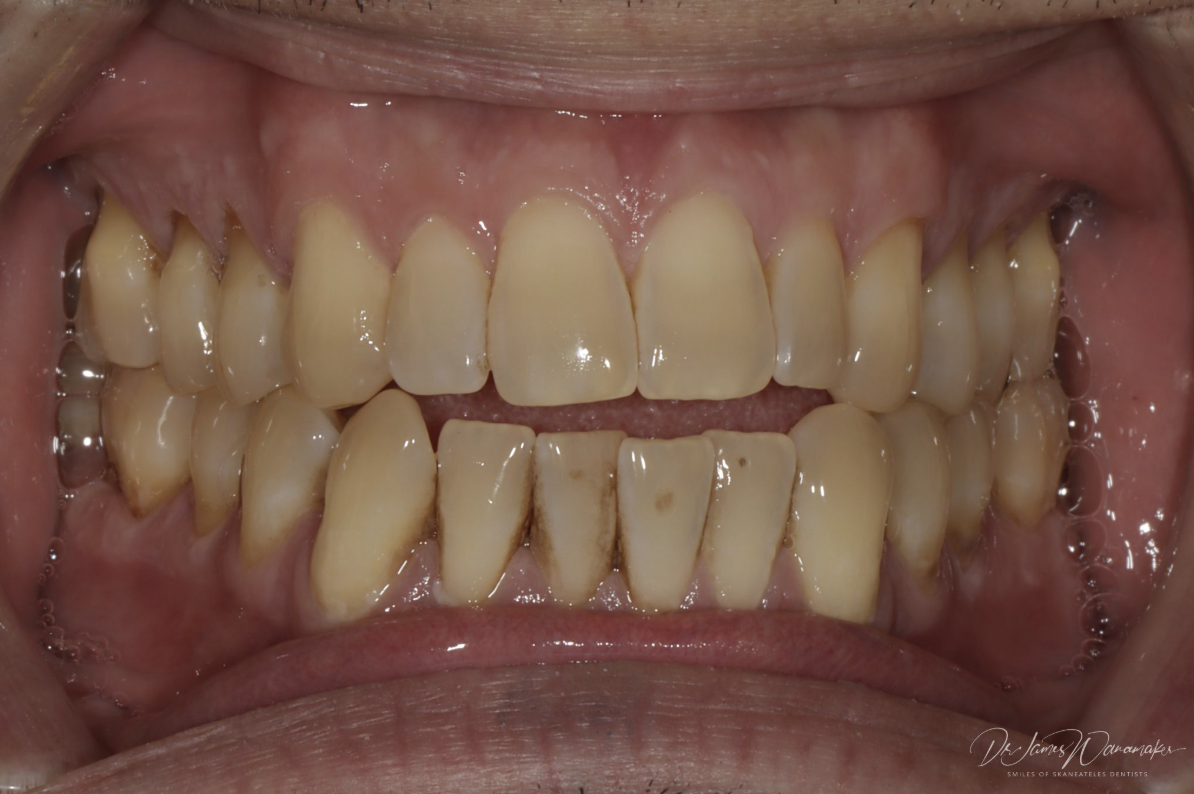
When a tooth is rotated, crowded, tipped, or otherwise malpositioned, placing a veneer over it doesn’t correct the underlying problem. Instead, it forces the restoration to compensate for the tooth’s position. The technician has to alter contours, create an unnatural emergence profile, or change the proportions of the tooth just to make everything appear aligned. Sometimes those compromises are subtle, but they’re still compromises.
The tooth is in the wrong place. The restoration is just trying to make it look like it isn’t.
Orthodontics addresses the actual problem. Once the teeth are where they belong, restorative treatment becomes far more conservative and predictable. Preparations are often smaller, the restorations blend more naturally with the surrounding dentition, and the final result simply looks more believable because the porcelain is enhancing ideal tooth position instead of trying to disguise poor positioning.
The Patients Who Benefit Most
Not every cosmetic patient needs orthodontic treatment, but I think many more patients would benefit from it than we sometimes recognize. A thorough diagnostic workup almost always reveals opportunities to improve the final result before a handpiece ever touches the tooth.
Anterior crowding is one of the most obvious examples. Restoring crowded teeth often requires removing healthy enamel simply to create symmetry. If those teeth are aligned first, we can preserve significantly more tooth structure while producing a smile that looks more natural. The same is true for rotated teeth, where restorative dentistry frequently ends up chasing a problem that orthodontics could have solved much more predictably.
Spacing presents a similar challenge. There are certainly cases where closing spaces with veneers is the right treatment, but widening multiple teeth to eliminate larger diastemas can quickly create proportions that don’t look natural. Orthodontic space closure followed by conservative restorative refinement often produces a much more balanced result while requiring less dentistry.
Axial inclination is another area where orthodontics makes a tremendous difference. I’ve written previously about how much tooth angulation influences smile esthetics. Even beautiful porcelain cannot truly recreate ideal axial inclination when the tooth itself is positioned incorrectly. Moving the tooth into the proper position allows us to prepare less, create better symmetry, and produce a restoration that looks like it belongs rather than one that’s compensating for the underlying anatomy.
The same concept applies to occlusal plane discrepancies, supraerupted teeth, collapsed segments, and uneven gingival architecture. Orthodontic intrusion or extrusion can completely change the restorative plan. Occasionally it even eliminates the need for restorative treatment on teeth that patients originally assumed would require veneers.
Preserving Tooth Structure Matters
One of the themes you will hear me come back to over and over is preserving tooth structure. Every time we prepare a healthy tooth for a veneer, we’re making an irreversible decision. That doesn’t make it the wrong decision, but it should always be a thoughtful one.
Once enamel is removed, there’s no putting it back. That tooth has entered a restorative cycle that will likely continue throughout the patient’s lifetime. Even when a case can be treated with little or no preparation, we are still bonding a restoration to a healthy tooth. If that restoration eventually needs to be replaced, and most of them will at some point, we’ve committed that patient to future treatment they otherwise may not have needed.
That’s why I believe every opportunity to preserve enamel deserves serious consideration. If orthodontics allows us to reduce the number of veneers, decrease the amount of preparation, or eliminate restorative treatment altogether, that option should be part of every comprehensive treatment discussion. Every millimeter of enamel we preserve is a long term investment in our patients’ oral health.
Photography Changes the Conversation
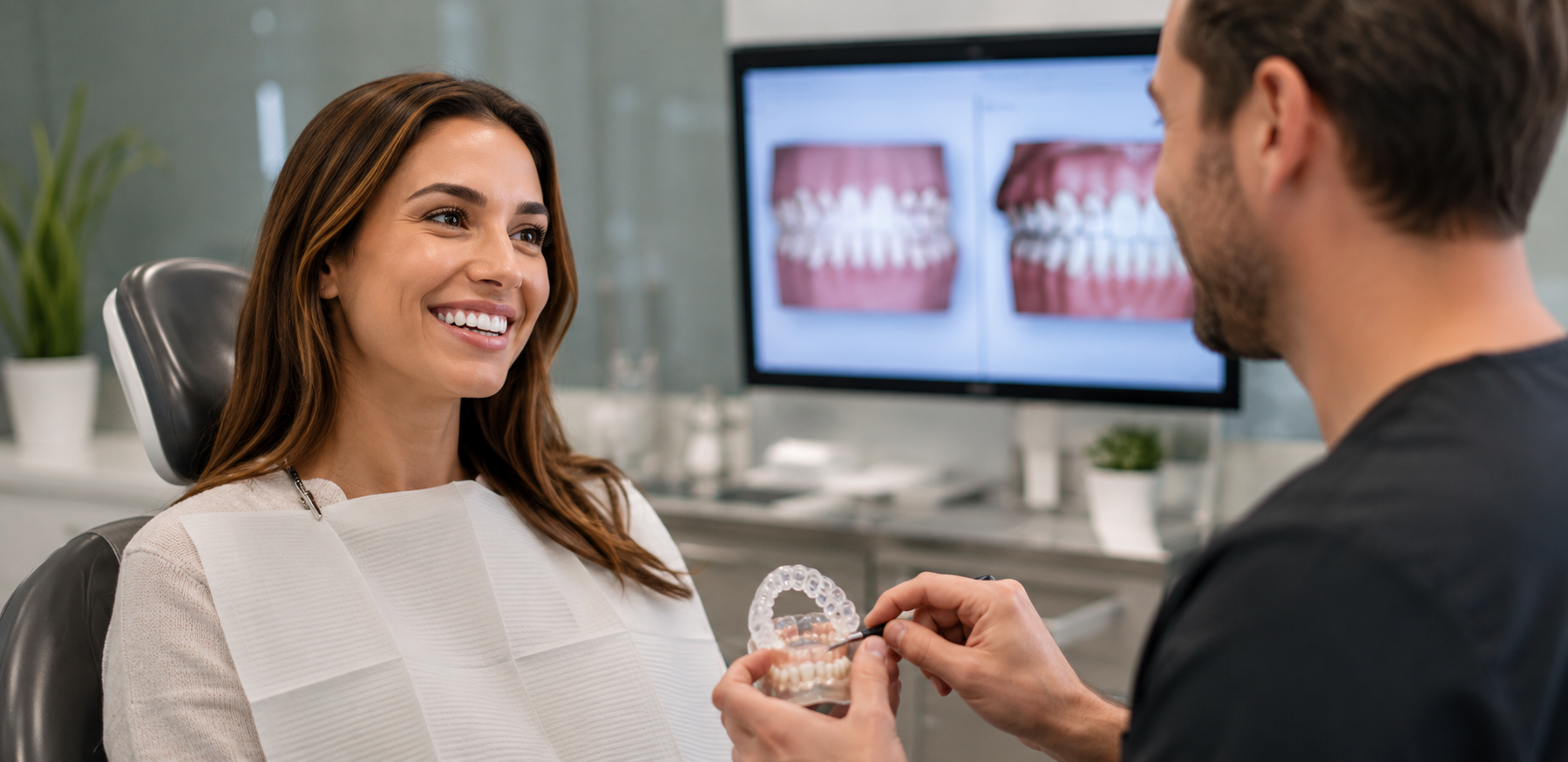
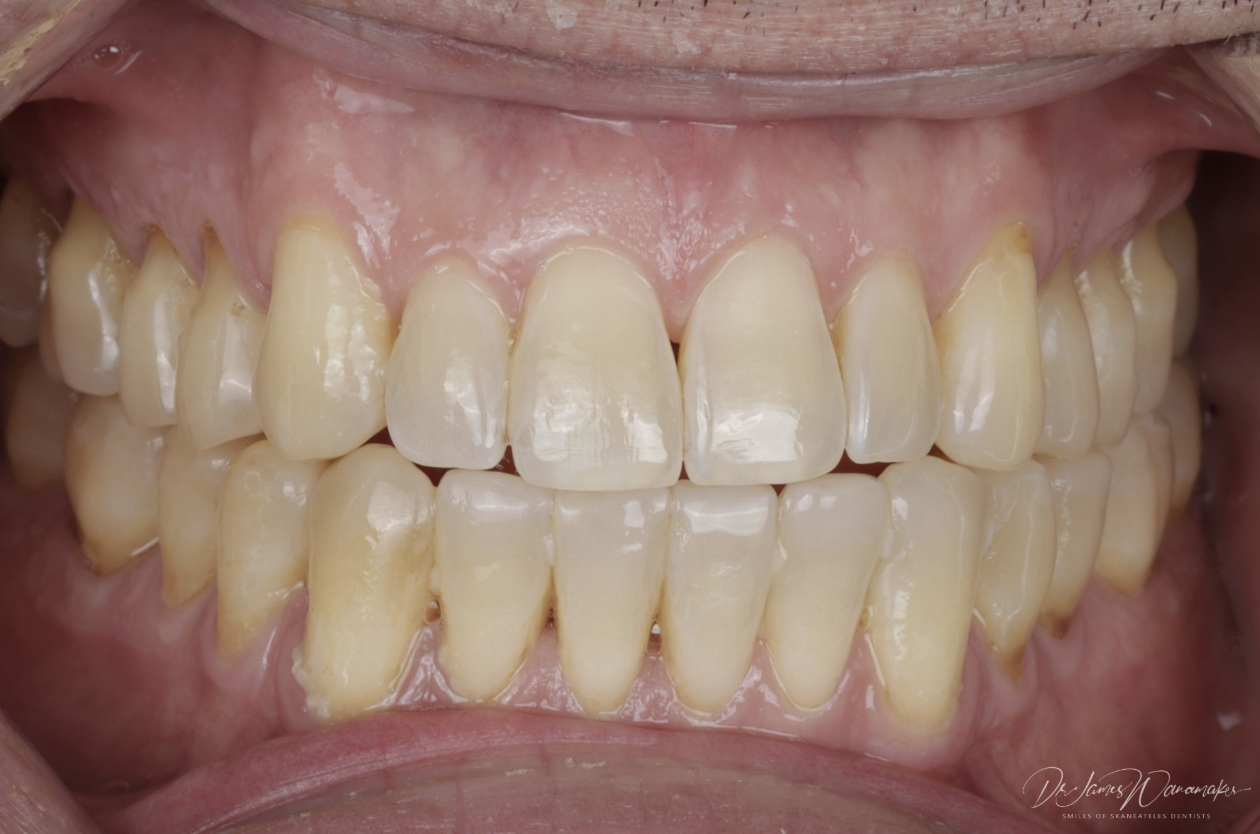
Photography plays a major role in helping me identify these opportunities. The same photographs I use to evaluate gingival architecture and smile design also reveal orthodontic issues that aren’t always obvious during a routine clinical examination. When I place a retracted photograph on a large monitor and draw reference lines through the long axis of each anterior tooth, problems with axial inclination become immediately apparent. Uneven gingival margins, incomplete eruption, and subtle asymmetries become much easier to appreciate when they’re viewed photographically rather than clinically.
Those photographs also become one of the most valuable communication tools I have. Instead of simply telling patients why I recommend orthodontics, I can show them exactly what I’m seeing. Patients don’t have to imagine how tooth position affects the final smile because it’s right there on the screen.
The same images also allow me to communicate with my orthodontic colleagues. We can discuss exactly where each tooth needs to be before restorative treatment begins, which means we’re both working toward the same endpoint. That’s when interdisciplinary dentistry works at its best. Everyone understands the destination before treatment starts.
Helping Patients Understand the Process
Not every patient is excited when orthodontics becomes part of the conversation. Most people schedule a cosmetic consultation expecting to hear about veneers, not clear aligners. Adding several months of orthodontic treatment can initially feel like a delay rather than a benefit.
I’ve found that this is where patient education becomes just as important as diagnosis. Once patients understand why moving the teeth first allows us to preserve more tooth structure, improve esthetics, and create restorations that look more natural, most of them begin to see orthodontics differently. They stop looking at it as a separate treatment and begin seeing it as part of the smile makeover they’ve already decided they want.
Of course, some patients still choose to move forward without orthodontics. If they make that decision after a thorough discussion, I respect it. My responsibility is to explain the advantages, discuss the compromises, and provide the best restorative result possible within those limitations. But the conversation has to happen first.
Why Clear Aligners Have Changed Acceptance
Clear aligner therapy has changed these conversations dramatically. Years ago, many adults declined orthodontic treatment because they didn’t want brackets and wires. Today, that objection has largely disappeared.
When patients understand that several months of aligner therapy can reduce tooth preparation, improve esthetics, and make their final restorations more conservative, many are surprisingly willing to do it. It has allowed us to recommend the ideal sequence of treatment rather than simply the fastest one.
Treatment Sequence Matters
One lesson has become clearer the longer I practice. The right procedures performed in the wrong order can still produce the wrong result.
Healthy periodontal tissues come first. When orthodontics is indicated, tooth movement should occur before restorative preparation. Occlusion should be stabilized before final restorations are delivered. Every phase of treatment should make the next phase easier, not more complicated.
I’ve learned over the years that shortcuts almost always have a way of showing up later. Sometimes they appear as unnecessary tooth reduction. Sometimes they show up as compromised esthetics or restorations that required more compromise than they should have. More often than not, they are problems that could have been avoided with better sequencing from the beginning.
The cases I’m most proud of usually aren’t the ones with the most veneers. They’re the cases where every phase of treatment built on the one before it, where healthy tooth structure was preserved whenever possible, and where every decision was made with the patient’s long term health in mind.
Final Thoughts
As cosmetic dentists, our goal isn’t simply to create beautiful restorations. Our responsibility is to create the best possible smile with the least amount of dentistry necessary to achieve it.
Sometimes that means veneers. Sometimes it means bonding or whitening. And sometimes the best treatment we can recommend is moving the teeth before we ever think about restoring them.
The goal has never been to place the most veneers. The goal is to create the healthiest, most natural, and most conservative smile possible.
When orthodontics helps us accomplish that, it isn’t delaying treatment. It’s helping us deliver a better result, and that’s what our patients deserve.
Keep Reading: Why Every Cosmetic Dentist Should Understand Occlusion