By: Ronda Holman
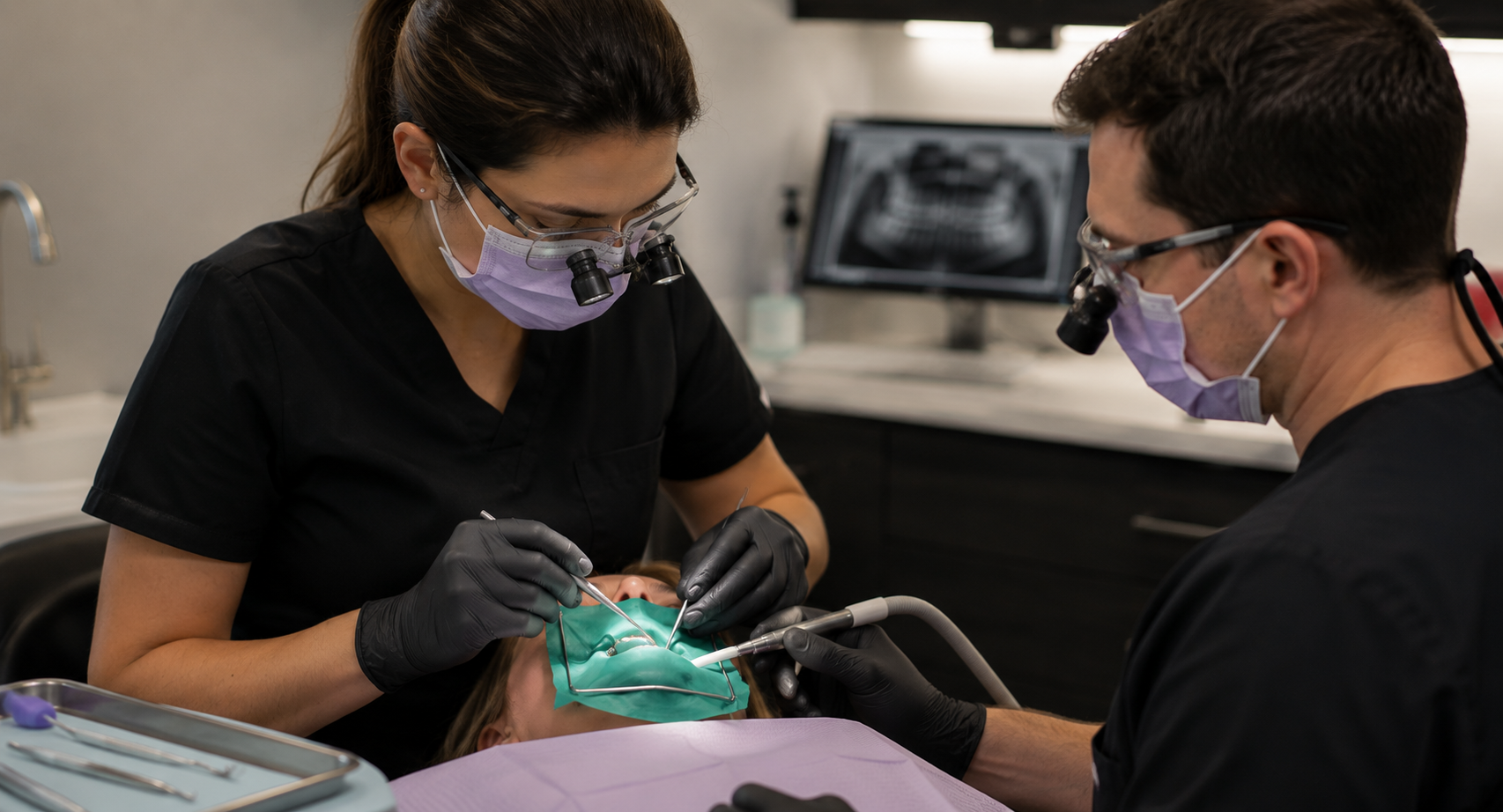
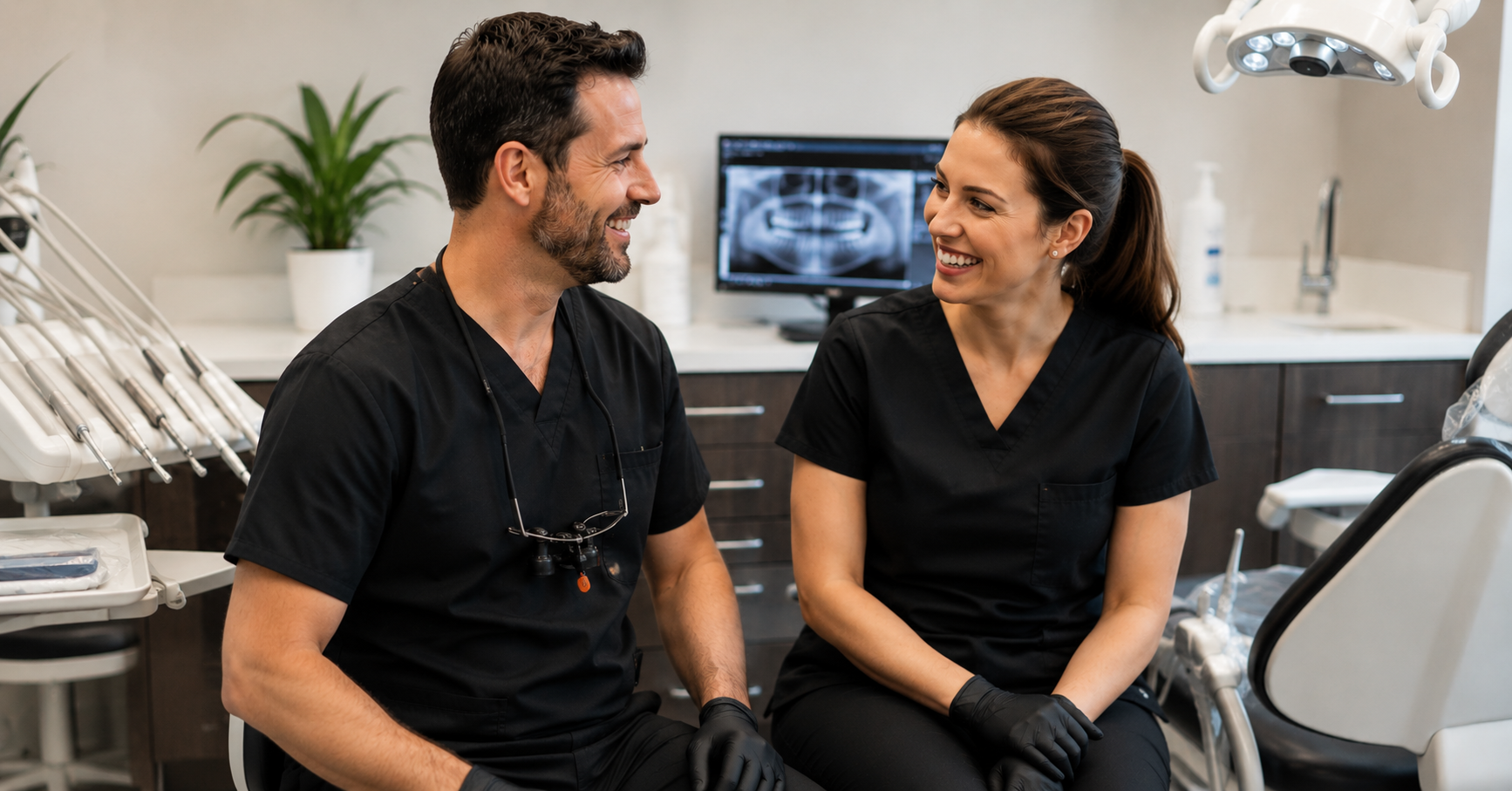
In every successful dental practice, there is usually a relationship quietly working behind the scenes that patients never fully see, but they absolutely feel. It’s the relationship between the dentist and the dental assistant. Not the “we just work together” relationship.
The finish each other’s sentences, know what instrument is needed before it’s asked for, survive the hard seasons together, kind of relationship.
The kind that lasts decades.
For young dentists entering practice ownership, one of the biggest hidden challenges is not technology, production goals, or even clinical skill, it’s finding and keeping the right team, especially the right dental assistant.
Because once you find the right assistant, everything changes.
- The day becomes smoother.
- Patients become calmer.
- Systems become automatic.
- Stress decreases.
- Production rises.
- And eventually, dentistry begins to feel effortless.
That kind of teamwork doesn’t happen accidentally. It is built intentionally over years of mutual respect, communication, trust, growth, and patience.
Recently, several long-term dental assistants were asked what actually keeps them with the same dentist for years and years. Their answers were surprisingly simple, and incredibly powerful.
One assistant who has worked with the same dentist for more than 25 years shared three key ingredients:
- Mutual respect
- The ability to laugh and have fun while staying professional
- Open communication and open minds
Another assistant summed it up in just three words:
- Respect
- Communication
- Sense of humor
Interestingly, not one assistant mentioned salary first. Not one mentioned fancy technology. Not one mentioned office décor.
They talked about how they were treated. That matters.
Mutual Respect Is the Foundation
Dental assistants want to feel valued, not just for what they do, but for what they know.
The strongest dentist-assistant teams operate as partnerships. The dentist may lead clinically, but experienced assistants often become the rhythm section of the practice. They see inefficiencies, recognize patient anxiety before anyone else, and frequently know how to keep the day flowing when things begin to unravel.
Young dentists who learn to respect the insight of their assistants early will build loyalty much faster than those who believe hierarchy equals leadership.
Respect looks like:
- Asking for input
- Saying thank you
- Remaining calm under pressure
- Avoiding public criticism
- Trusting your assistant with responsibility
- Recognizing their clinical instincts and experience
Respect is not complicated, but inconsistency destroys it quickly.
Laughter Matters More Than Most Dentists Realize
Dentistry is stressful.
There are production goals, difficult procedures, anxious patients, schedule changes, emergencies, equipment failures, insurance frustrations, and physical exhaustion.
Teams that survive together long term usually learn how to laugh together.
That does not mean unprofessional behavior. It means creating an environment where people can breathe.
Humor diffuses tension. It creates emotional safety. It helps teams recover from hard days instead of carrying stress home.
The best long-term dental teams often feel like family, not because everything is perfect, but because they’ve gone through difficult seasons together and learned how to keep moving.
Communication Prevents Quiet Resentment
Most long-term team breakdowns do not happen because of one major event.
They happen because small frustrations remain unspoken for too long.
Assistants need to feel safe bringing concerns forward without fear of embarrassment or retaliation. Dentists need to communicate expectations clearly and consistently.
The healthiest offices create regular opportunities for communication before problems become emotional.
That includes:
- Morning huddles
- End-of-day check-ins
- Team meetings
- One-on-one conversations
- Honest discussions about workflow and systems
Open-minded communication also means being willing to evolve together.
The dentist who says, “This is how I’ve always done it,” often creates stagnation. The dental teams that thrive for decades are the ones that continue improving together.
Great Teams Are Taught, Not Found Overnight
One of the biggest frustrations young dentists experience is realizing that their dental assistants do not automatically think the way they do.
And that makes sense.
Dentists spend years in dental school learning anatomy, occlusion, pathology, treatment planning, biomechanics, materials, sequencing, and the reasoning behind every procedure they perform. Dental assistants, no matter how talented, simply have not received the same depth of clinical education.
That gap can create frustration early in a dentist-assistant relationship.
Many young dentists unintentionally assume their assistants should already understand:
- Why a certain bur is selected
- Why tissue management matters
- Why occlusion adjustments are critical
- Why a procedure sequence changed
- Why something clinically “doesn’t feel right.”
But strong long-term teams are not built by expecting assistants to magically understand dentistry at the dentist’s level.
They are built by teaching.
The best dentists eventually realize that a great assistant is not just someone who learns what to do. A great assistant learns why things are being done.
And that takes time.
When dentists slow down enough to explain procedures, narrate their thinking, review radiographs together, discuss treatment planning, and teach the “why” behind the workflow, something powerful happens:
The assistant begins developing clinical intuition.
Eventually, the assistant starts anticipating needs before they are spoken. They understand the purpose behind the procedure instead of simply memorizing steps.
That is when true autopilot begins.
Teaching also creates investment. Dental assistants are far more likely to stay in practices where they feel they are growing professionally instead of simply passing instruments all day.
The most successful long-term dentists often become mentors, not just employers.
And the practices with the strongest culture are usually the ones where learning never stops, for anyone.
Continuing Education Builds Unity
One of the most overlooked retention tools in dentistry is continuing education.
When dentists invest in learning with their assistants, something important happens: the team grows together instead of separately.
Taking assistants to CE courses communicates:
“You matter enough for me to invest in your future.”
That message is powerful.
Learning together also creates shared language, shared systems, and shared excitement. Teams return from CE courses energized with new ideas and renewed motivation.
Even more importantly, assistants begin feeling like part of the mission, not just employees completing tasks.
Young dentists who prioritize team education early often create a stronger long-term culture than practices focused only on production.
The offices with the best longevity usually learn together, adapt together, and improve together.
Consistency Creates Autopilot
The dream of every mature dental practice is autopilot. Not robotic dentistry, but smooth dentistry.
The kind where:
- Rooms turn effortlessly
- Instruments appear before they’re requested
- Patients feel calm and confident
- The schedule flows naturally
- Team members anticipate needs instinctively
That level of synchronization takes years. And it only happens when the team stays together long enough to develop trust, rhythm, and predictability.
Every time a practice loses an assistant, it loses institutional memory. Training starts over. Efficiency drops. Stress rises.
Retention is not just about loyalty. It is a clinical and operational advantage. The longer the partnership lasts, the more dentistry becomes intuitive.
The Young Dentist’s Mindset Shift
Many young dentists unknowingly approach staffing with a short-term mindset:
“How do I hire someone?”
The better question is:
“How do I become someone people want to work beside for 40 years?”
That answer has very little to do with perfection. It has everything to do with leadership.
Long-term teams are usually built by dentists who are:
- Humble enough to listen
- Calm under pressure
- Willing to teach
- Open to feedback
- Consistent in behavior
- Appreciative of their team
- Invested in growth
Dental assistants do not stay because every day is easy. They stay because they feel respected, included, supported, challenged, and valued.
Final Thoughts
The strongest dental practices are rarely built by one person.
They are built by teams that stay together long enough to become extraordinary together.
A dentist and assistant who spend decades side by side eventually develop something difficult to teach and impossible to fake:
trust, rhythm, anticipation, loyalty, and confidence in one another.
That is the real recipe for the long haul. And when a practice achieves it, patients can feel it the moment they walk through the door.
⭐ Learn More: Buying a Dental Practice Is the Easy Part—Earning the Team’s Trust Is the Real Work