By: Dr. James Wanamaker, Clinical Director & Coach, IgniteDDS
When we talk about improving the hygiene department, the conversation usually goes straight to systems. Better periodontal protocols, better scheduling, better case presentation, more training, better communication. All of those things are important, and all of them can make a difference.
But there is another variable that has a huge impact on whether those systems actually work: the doctor.
We can give our hygienists great systems, clear protocols, and plenty of training, but if the doctor and hygienist aren’t aligned on diagnosis, communication, and where the patient goes next, those systems will eventually break down. What we sometimes fail to recognize as doctors is that we may actually be the ones breaking them down.

Patients Hear Everything
Think about a typical hygiene appointment. Your hygienist may have just spent 40+ minutes educating a patient about changes in their periodontal health. They’ve reviewed probing depths, bleeding, bone levels, radiographs, and what has changed since the patient’s last visit. The patient is starting to understand that there is a problem.
Then we walk in, take a quick look, and say, “Yeah, there are a couple little areas we’ll keep an eye on.”
It seems harmless, but think about what the patient just heard. For the last 40 minutes, their hygienist has been explaining why something needs attention. Then the doctor walks in and, intentionally or not, makes it sound like it isn’t that important.
So the patient waits.
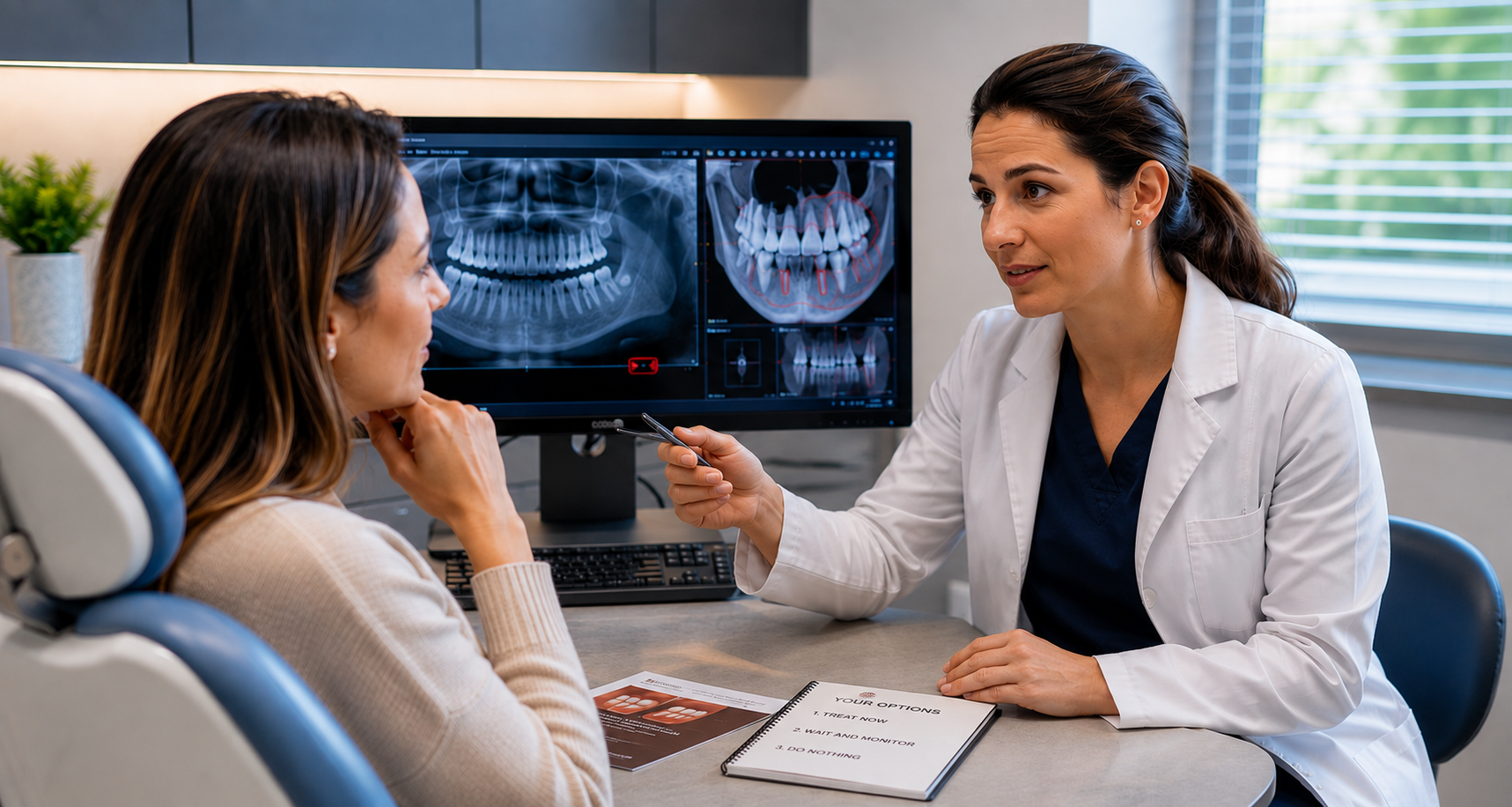
The same thing happens with restorative dentistry. A hygienist identifies an area of concern, shows it to the patient on an intraoral photograph, discusses what they’re seeing, and prepares the patient for our evaluation. Then we come in and completely change the language. A fracture becomes a “little crack.” Active periodontal disease becomes “some inflammation.” Treatment becomes “something we can watch.”
Sometimes we think we are reassuring the patient or being conservative. What we may actually be doing is creating uncertainty. The hygienist sounded concerned. The doctor didn’t. Now the patient has to figure out which version to believe.
That’s not a great position to put a patient in, and most patients respond to that uncertainty in the same way: they do nothing.
The Hygiene Exam Starts Before You Walk Into the Room
One of the biggest changes I made in my own practice was changing how I thought about the hygiene exam. I used to think of it as something that happened when I walked into the operatory. Now I think it starts much earlier in the day.
For me, a lot of that happens during the morning huddle.
I currently have three hygienists, and I spend a few minutes individually reviewing each of their schedules. On a macro level, we are looking at how their schedules line up with mine and where I will most likely be able to complete periodic exams without creating a traffic jam later in the day.
Then we get more specific. Who is due for radiographs? Who needs periodontal charting? Who has unscheduled treatment? Is there a patient we already know may require a longer conversation? Are there personal details we should remember from their last visit?
This does not need to become a 45-minute meeting. In fact, it shouldn’t. A few focused minutes in the morning can save a tremendous amount of time later in the day.
More importantly, when I walk into the hygiene operatory, I have context. I’m not walking in cold and asking my hygienist to give me the entire story while the patient sits there listening.
Clinical pearl: The more prepared you are before the hygiene exam, the less time you have to spend figuring things out during it.
Reinforce, Don’t Replace
This is probably the biggest shift I want doctors to make.
When I enter a hygiene exam, my job is not to start the conversation over. My hygienist has already spent a significant amount of time gathering information, educating the patient, and discussing what they are seeing. I want to build on that work, not erase it and start from zero.
Before I walk in, I need some form of communication from my hygienist. That might be an interoffice message, a quick conversation in the hallway, a note, or even a brief discussion in front of the patient while I’m washing my hands. The method matters less than the fact that the communication happens.
I review the radiographs. I look at the periodontal findings. If there are intraoral photos, I want to see them. I want to understand the concern before I start talking.
Then I can say something as simple as,
“I reviewed everything, and I agree with what your hygienist is seeing.”
That sentence does a lot of work.
Instead of the patient hearing two different opinions from two different providers, they hear one message from their dental team. From there I can expand on the findings, explain why they matter, answer questions, and determine the appropriate next step.
This doesn’t mean we blindly agree with everything another provider says. We are still responsible for our own diagnosis. But if there is a difference of opinion, the hygiene exam with the patient sitting in the chair is probably not the ideal place for the doctor and hygienist to discover it.
Clinical pearl: Don’t make your hygienist re-earn credibility every time you walk into the room.
What Can You Change Tomorrow?
There is a lot that goes into building a strong hygiene department. Periodontal diagnosis matters. Scheduling matters. Communication, technology, metrics, restorative handoffs, and team training all matter. We go much deeper into each of these areas in our new IgniteDDS hygiene course.
But from the doctor’s side, there are a few things you can start looking at immediately.
Before your next hygiene exam, find out what your hygienist is seeing before you enter the room. When you get there, pay attention to the language you use and whether it reinforces or unintentionally minimizes the conversation that has already taken place. And if you aren’t consistently reviewing the hygiene schedule during your morning huddle, start there.
None of this is complicated, but it does require consistency.
A great hygiene department isn’t created because we wrote a new protocol and put it in a binder. It happens when the doctor and hygiene team approach the patient with the same clinical philosophy, the same expectations, and the same message day after day.
When we get that right, patients notice. The team notices too.
Diagnosis becomes clearer. There is less friction around treatment conversations. The schedule flows better. Hygienists become more confident because they know the doctor is going to support the clinical conversation they have spent the last 40 minutes having with the patient.
And as doctors, we stop walking into hygiene exams feeling like we have to figure everything out in three minutes.
That’s a better experience for everyone.
Taking Hygiene to the Next Level
Doctor Alignment: The Dentist’s Role in Hygiene Success is my section of our new IgniteDDS Hygienist Course, but doctor alignment is only one part of what makes a hygiene department successful.
The course goes much deeper into the clinical systems, communication, patient experience, and team processes that allow hygiene to become a stronger part of the practice without turning the department into a production machine.
Because ultimately, this isn’t about squeezing more dentistry out of the hygiene schedule. It’s about creating a team that recognizes disease consistently, communicates it clearly, and gives patients the information they need to make good decisions about their health.
If you know your hygiene department has another level it can reach, I think you and your team will get a lot out of this course.