If there’s one principle that consistently comes up when I teach my restorative and cosmetic dentistry courses, it’s this: predictability isn’t an accident. It’s the result of controlling as many variables as possible.
As dentists, we’re constantly searching for better outcomes. We invest in the latest composites, compare bonding agents, debate universal versus selective etching, and buy curing lights that promise deeper polymerization. All of those things matter, but none of them can overcome one simple problem: a contaminated bonding surface. That’s why I use a rubber dam for the vast majority of my restorative procedures not just for endodontics or complex cases, but for everyday restorative dentistry.
The Weakest Link in Adhesive Dentistry
Modern adhesive dentistry is incredibly reliable when we follow the rules. The challenge is that our bonding systems were designed to work in a controlled environment, while the oral cavity is anything but controlled. Saliva pools, blood appears from a sulcus, the tongue decides it wants to help, a patient coughs, or the suction moves away for just a moment. Individually, none of these interruptions seem significant, but collectively they can compromise a restoration before you’ve even finished polishing it.
The frustrating part is that we rarely connect the dots. When a restoration debonds a few years later, develops marginal staining, or shows recurrent decay, we don’t usually think back to the brief moment of contamination during placement. Yet moisture contamination remains one of the most common reasons adhesive restorations fail prematurely. If we’re serious about longevity, moisture control is not optional. It is foundational.
The Rubber Dam Doesn’t Reduce Risk. It Eliminates It
People often describe rubber dam isolation as a way to reduce contamination. I see it differently. I see it as removing an entire variable from the procedure. Every clinician wants more predictable dentistry, and predictability comes from eliminating variables whenever possible.
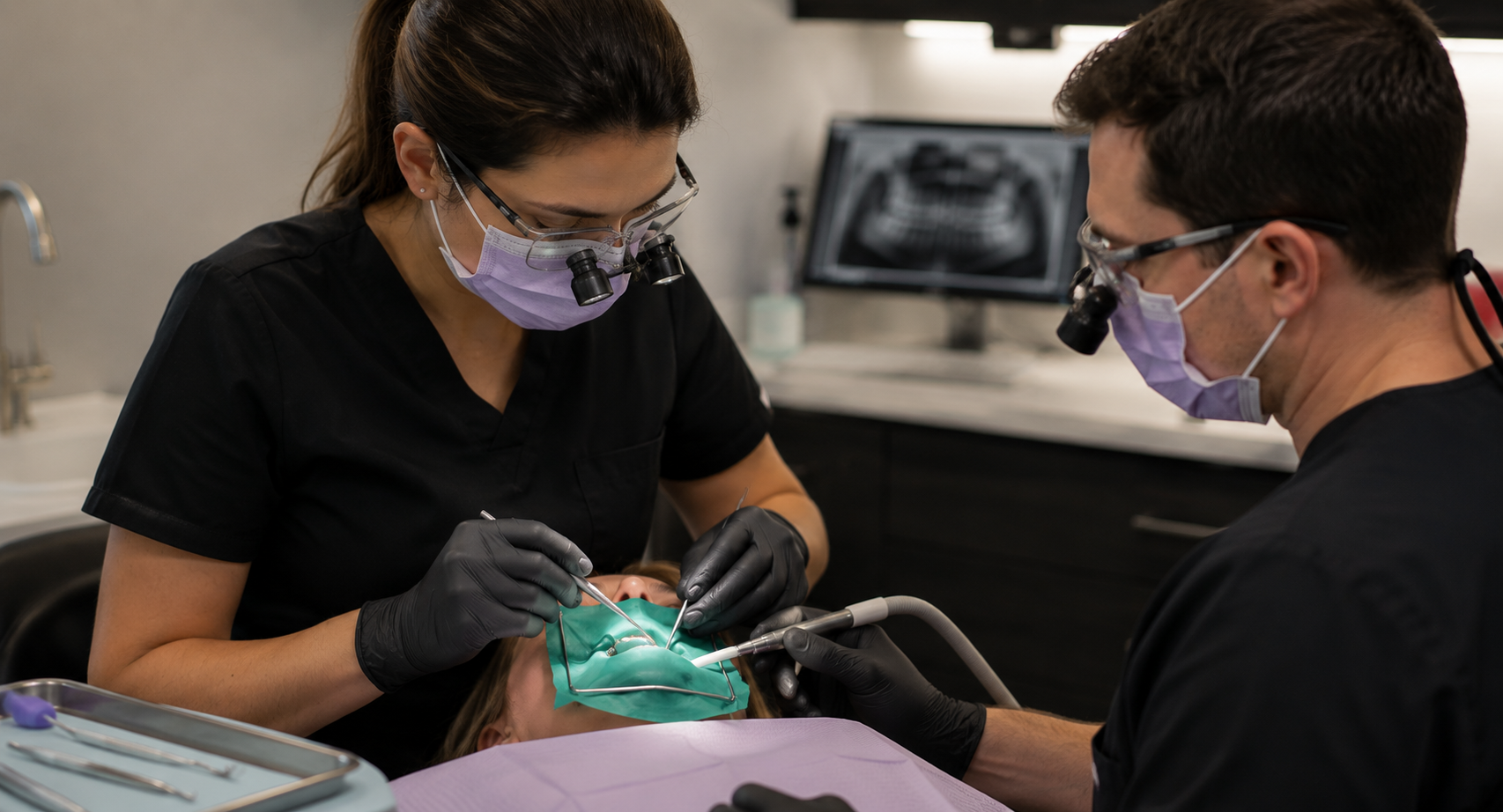
With a rubber dam in place, I’m not wondering if saliva found its way onto my preparation or asking my assistant to constantly chase moisture. I’m not hoping the patient doesn’t move at the wrong moment. That variable is simply gone, allowing me to focus entirely on the restoration instead of managing the environment around it.
More Than Moisture Control
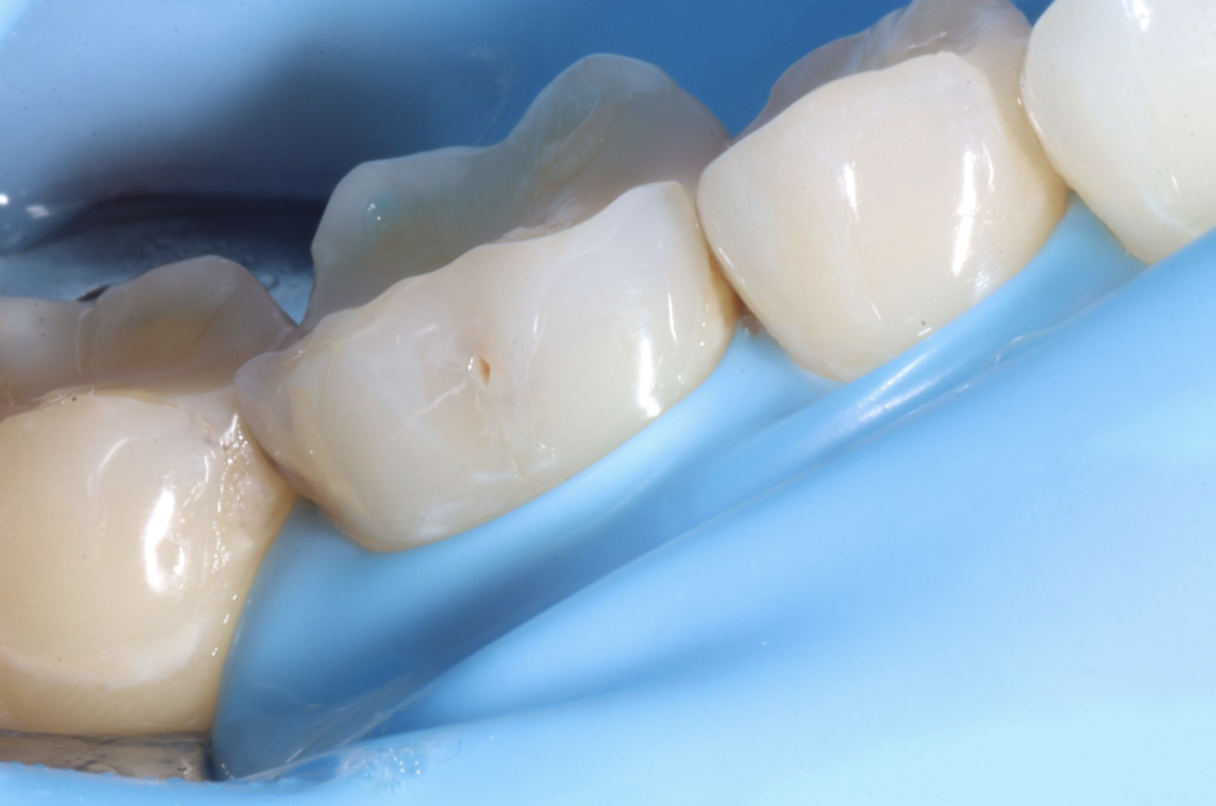
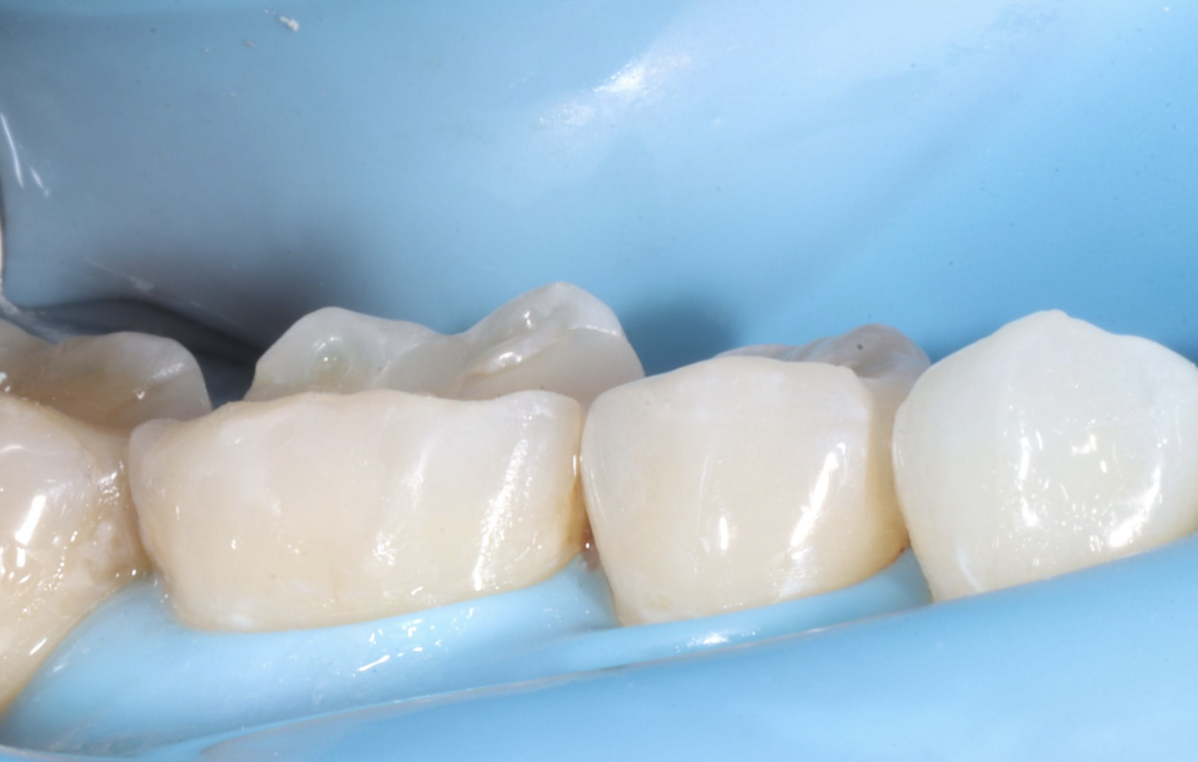
The benefits of a rubber dam go well beyond keeping the field dry. Isolation changes the entire procedure. Soft tissue is retracted and protected, margins become easier to visualize, and the operative field is cleaner and better defined. I can concentrate on preparation design, adhesive technique, and restorative anatomy instead of constantly managing cheeks, tongues, saliva, and suction. Studies also support a reduction in microorganisms. The 1989 study published in the Journal of the American Dental Association demonstrated that using a rubber dam during restorative procedures “reduces airborne and surface microbial contamination by 70% to 99%.”
There is also an important safety component. Patients aren’t at risk of swallowing chunks of amalgam, burs, wedges, matrix bands, etchant, or restorative materials. Ironically, many patients are actually more comfortable once the rubber dam is in place because they no longer have to think about swallowing or coordinating with the suction. They can simply relax while we work.
The Time Argument
The objection I hear most often is that placing a rubber dam takes too much time. Technically, that’s true. It does add a few minutes to the appointment. But I’ve always believed those are some of the most valuable minutes we spend. The more you practice and use it the faster you will become in placing dams.
Think about the alternative. A posterior composite that fails years earlier than it should because contamination compromised the bond doesn’t just require another restoration. It often means additional tooth structure is removed, more chair time is required, more materials are used, and the patient has to return for treatment that might have been avoidable. Suddenly, those extra few minutes at the beginning of the original appointment seem like an incredible investment.
We’re willing to spend thousands of dollars on equipment that promises incremental improvements in our clinical outcomes, yet some clinicians hesitate to spend five minutes creating the ideal environment for adhesive dentistry to succeed. That has never made much sense to me.
Patient Acceptance
Another concern I hear is that patients won’t tolerate a rubber dam. In my experience, patient acceptance has much more to do with how we introduce it than with the rubber dam itself.
If we present it apologetically, patients assume it’s something unpleasant. Instead, I simply explain that I use it to keep the tooth completely clean and dry, protect them from swallowing debris, and give them the best possible restoration. That is an explanation patients understand, and most appreciate the extra attention to detail.
In fact, I think it communicates something larger. Patients notice attention to detail. When they see that you’re willing to take extra steps to improve the quality and longevity of their treatment, it reinforces their confidence in the care they are receiving.
Are There Exceptions?
Absolutely. Dentistry is full of exceptions. There are severely compromised teeth, deep subgingival margins, and patients with significant gag reflexes where alternative isolation techniques may be more appropriate. Clinical judgment always comes first.
But those situations should remain the exception rather than the rule. For posterior adhesive restorations, Class II composites, removing amalgam or existing crowns, direct anterior bonding, and indirect restorations, rubber dam isolation is my default. If I’m choosing not to use one, I want there to be a legitimate clinical reason not simply convenience. If I can’t use a dam my next options are Dryshield® , Optragate® 2,
What Changed in My Practice
When rubber dam isolation became a standard part of my restorative workflow rather than something I used selectively, I noticed several meaningful changes. My restorations looked better because I could clearly see my margins and work in an environment free of distractions. Composite adaptation improved, finishing became more precise, and I spent less mental energy managing the operative field.
Perhaps more importantly, I became more confident in the work I was delivering. That confidence didn’t come from believing I had become a better dentist overnight. It came from knowing I had eliminated one of the biggest variables that can affect adhesive success. Confidence comes from controlling what you can control.
Excellence Lives in the Fundamentals
Dentistry will always continue to evolve. New materials, new technologies, and new techniques will continue to improve the way we practice, and I enjoy learning about every one of them. But when I look back at the changes that have had the greatest impact on my own clinical outcomes, most haven’t been revolutionary. They’ve been disciplined improvements in the fundamentals.
Rubber dam isolation is one of those fundamentals. It isn’t glamorous, and patients probably won’t choose your practice because you use one; but your restorations may very well last longer because you did.
When I teach, I often remind dentists that our goal isn’t simply to place beautiful restorations on the day of treatment. Our goal is to give those restorations every possible advantage to succeed for years to come. That starts with controlling the variables we can control.
At the end of the day, placing a rubber dam takes a few extra minutes. The restoration you’re placing should serve that patient for years. That’s a trade I’ll make every single time.
⭐️ Keep Reading: The Role of Orthodontics in Cosmetic Dentistry