Occlusal Wear: Is It Advancing? How Fast?

By: Lee Ann Brady DMD I ask the question “Is wear normal?” at almost every lecture I do on occlusion. Usually the response is a small number of mumbled replies. A good follow up question is “How many eighty-five-year-old patients have you seen with mamelons?” I hope you are thinking not many, if any at all. So, yes, tooth wear of some amount is normal. A combination of attrition, erosion and abrasion cause all of us to lose enamel over a lifetime. Is the wear advancing at a pathological rate? The more important question is when is the wear age-appropriate and when is it advancing at a pathologic rate? We don’t have the data to know how many millimeters of enamel loss is appropriate at every decade of life. In order to help with this answer in my office, I play a mental game. With the picture of the patient’s current wear in mind and a knowledge of their age, I imagine if the wear continues at the same rate at what age their teeth will be in jeopardy or need restorative dentistry to be saved. I then reveal this estimate to the patient. You can document wear over time in three ways. I believe it is important that I help my patients understand the process and the options for protecting their teeth. To quantify the amount of wear that is happening, we take a measurement from the CEJ to the incisal edge of several teeth with wear. We take the measurement on the mid-facial and record it on the patient’s perio chart. At subsequent appointments we can now repeat these measurements and have clear data that the process is continuing. Another great way to document tooth wear is with photography. With repeat photographs, we and the patient can see the change over time. Today with digital impressions and software we can scan the arch, and then compare scans months or years later and get a precise measurement of the change. What is causing the wear? I believe that some wear is normal. I base this on the fact that I have very few if any patients who are in their seventies or eighties and still have mamelons on their incisors. Wear is a concern when the amount of tooth structure being lost is out pacing the patient’s age. I wrote about determining when wear leaves the physiologic category and becomes something we need to discuss with patients. Both attrition and erosion can cause severe tooth wear, but they pose different long-term risks. Once we have a sense of the cause of tooth wear, we can partner with the patient to treat the damage and manage the progression. These are the guidelines for discerning attrition from erosion. Attrition is the loss of tooth structure caused when the patient rubs two tooth surfaces together. You will observe: • Matching facets on upper and lower teeth • Facets on tooth surfaces that occlude • Enamel and dentin worn evenly Erosion is caused by the presence of acid from issues like GERD and eating disorders. You will observe: • Facets that may or may not match on upper and lower teeth • Facets on tooth surfaces that are not in occlusion • Dentin cupped out and wearing faster than enamel • Tooth structure wearing around restorations that remain unchanged Note that attrition can be seen in addition to erosion, often giving us a false sense of how much the patient truly parafunctions, as the etched tooth structure wears away more easily. Occlusal Therapy Why Occlusal Appliance Therapy Is My First Step Prior to Ortho, Equilibration, or Restorative Occlusal changes on an appliance are easy and reversible. An appliance can immediately reduce elevator muscle activity and give the patient relief. The patient also experiences what changes to their tooth contacts could provide for them long term. We can test the changes that would be made by ortho, equilibration, and/or restorative. Our goals are to stabilize the joint anatomy and reduce the activity of the elevator muscles because those muscles are what overload the joints and teeth. We also want to slow down the rate of damage to the dentition and move that rate back to a more age-appropriate pace. We also may need to reorganize a patient’s occlusion to manage occlusal forces to ensure restorations that last. Removing Posterior Contacts Does Not Work for Every Patient Over my years of clinical practice, I have found that changing the occlusion does reduce functional risk for most patients. But we all have patients with perfect occlusion who present with TMD symptoms. We have some patients who continue to parafunction after we move them into immediate posterior disclusion. Studies show that proprioception causes the elevator muscles to engage in only 80 to 85% of the population. This means that when the brain receives the signal that teeth are touching, the brain elevates the masseter muscles in 80 to 85% of people. Tooth contact is the trigger. Because this proprioception does not occur for 15 to 20% of the population, it is not the universal trigger for excessive loading. Over my years in clinical practice, I have learned there is nothing I can do that is 100% dependable to stop a patient from para-functioning. Some of my patients continue to excessively load after posterior contacts are removed. Their functional risk does not diminish. If we cannot reduce elevator force and redistribute force enough on an occlusal appliance to eliminate or at least relieve TMD symptoms, then occlusal therapy via ortho, equilibration, or restorative will not satisfactorily help the patient. We will need to turn to other forms of therapy. Other modalities I use are BOTOX to deactivate muscles, massage therapy, and physical therapy. There are also systemic medications, cold lasers, and TENS therapy we can use to reduce the activity of the muscles or reduce inflammation in the muscles and joints. Sometimes one modality will alleviate symptoms for a while and when symptoms return, we can try it again or try another modality. An Exercise to Identify the Patients Who May Not Benefit from Occlusal Therapy You can do what I call a poor man’s EMG on yourself by placing your hands on your masseter muscles. Put your back teeth together, clench and release, clench and release, clench and release to see how much masseter activity you have. Then move your teeth into protrusive edge to edge and try to clench a little bit, making sure your back teeth do not touch. If you now have a posterior tooth touching in the edge-to-edge position, then put a pencil or pen between your front teeth to separate your back teeth. With no back teeth touching and contact on the centrals, try to clench and release two or three times while feeling your masseters. Most of you will find your masseters do not move or move a lot less when no back teeth are touching. Some of you, even with your back teeth separated, can still clench in protrusive and can still increase the muscle activity almost the same amount as when your back teeth touch. I do this exercise with my patients, but when they move into protrusive, I put a bite stop over their front teeth or have them bite on a Lucia jig we have lined for their bite registration. If you do this test with your patients, you can use an EMG or feel the muscle activity with your hands. If the patient can still generate almost the same force or the same force with their back teeth separated, you have identified one of the around 15% of people who might not benefit significantly from occlusal therapy. You’ve also identified someone who might not do well on an anterior-only appliance because, if they can generate that same force on just two teeth, they are at risk for those teeth becoming sore and moving. Interested in Learning More? Join me at The Pankey Institute with The Essentials Series. Starting with Essentials 1, this series offers a comprehensive and structured approach to dental education. Participants will gain essential knowledge and skills, enabling them to build a solid understanding of fundamental concepts in dentistry. From fundamental principles to essential clinical techniques, this series lays the groundwork for a successful dental practice and provides a strong platform for further specialization.

By: Lee Ann Brady DMD

I ask the question “Is wear normal?” at almost every lecture I do on occlusion. Usually, the response is a small number of mumbled replies.

A good follow-up question is “How many eighty-five-year-old patients have you seen with mamelons?” I hope you are thinking not many if any at all.

So, yes, tooth wear of some amount is normal. A combination of attrition, erosion, and abrasion causes all of us to lose enamel over a lifetime.
Is the Wear Advancing at a Pathological Rate?

The more important question is when is the wear age-appropriate and when is it advancing at a pathologic rate?

We don’t have the data to know how many millimeters of enamel loss is appropriate for every decade of life. In order to help with this answer in my office, I play a mental game.

With the picture of the patient’s current wear in mind and a knowledge of their age, I imagine if the wear continues at the same rate at what age their teeth will be in jeopardy or need restorative dentistry to be saved.

I then reveal this estimate to the patient.

3 Ways To Document Wear Over Time

I believe it is important that I help my patients understand the process and the options for protecting their teeth.

1. Repeat Measurements

To quantify the amount of wear that is happening, we take a measurement from the CEJ to the incisal edge of several teeth with wear.

We take the measurement on the mid-facial and record it on the patient’s perio chart.

At subsequent appointments, we can now repeat these measurements and have clear data that the process is continuing.

2. Repeat Photography

Another great way to document tooth wear is with photography.

With repeat photographs, we and the patient can see the change over time.

3. Repeat Digital Impressions

Today with digital impressions and software we can scan the arch, and then compare scans months or years later and get a precise measurement of the change.

What is Causing the Wear?

I believe that some wear is normal. I base this on the fact that I have very few if any patients who are in their seventies or eighties and still have mamelons on their incisors.

Wear is a concern when the amount of tooth structure being lost is outpacing the patient’s age.

I wrote about determining when wear leaves the physiologic category and becomes something we need to discuss with patients.

Both attrition and erosion can cause severe tooth wear, but they pose different long-term risks.

Once we have a sense of the cause of tooth wear, we can partner with the patient to treat the damage and manage the progression.

Guidelines for Discerning Attrition from Erosion

Attrition is the loss of tooth structure caused when the patient rubs two tooth surfaces together.

You will observe:

  • Matching facets on upper and lower teeth
  • Facets on tooth surfaces that occlude
  • Enamel and dentin worn evenly

Erosion Caused by the Presence of Acid from Issues like GERD and Eating Disorders

You will observe:

  • Facets that may or may not match on upper and lower teeth
  • Facets on tooth surfaces that are not in occlusion
  • Dentin cupped out and wearing faster than enamel
  • Tooth structure wearing around restorations that remain unchanged

Note that attrition can be seen in addition to erosion, often giving us a false sense of how much the patient truly parafunctions, as the etched tooth structure wears away more easily.

Occlusal Therapy

Why Occlusal Appliance Therapy Is My First Step Prior to Ortho, Equilibration, or Restorative

Occlusal changes on an appliance are easy and reversible. An appliance can immediately reduce elevator muscle activity and give the patient relief.

The patient also experiences what changes to their tooth contacts could provide for them long term. We can test the changes that would be made by ortho, equilibration, and/or restorative.

Our goals are to stabilize the joint anatomy and reduce the activity of the elevator muscles because those muscles are what overload the joints and teeth.

We also want to slow down the rate of damage to the dentition and move that rate back to a more age-appropriate pace. We also may need to reorganize a patient’s occlusion to manage occlusal forces to ensure restorations that last.

Removing Posterior Contacts Does Not Work for Every Patient

Over my years of clinical practice, I have found that changing the occlusion does reduce functional risk for most patients.

However, we all have patients with perfect occlusion who present with TMD symptoms. We have some patients who continue to parafunction after we move them into immediate posterior disclusion.

Studies show that proprioception causes the elevator muscles to engage in only 80 to 85% of the population. This means that when the brain receives the signal that teeth are touching, the brain elevates the masseter muscles in 80 to 85% of people. Tooth contact is the trigger. Because this proprioception does not occur for 15 to 20% of the population, it is not the universal trigger for excessive loading.

Over my years in clinical practice, I have learned there is nothing I can do that is 100% dependable to stop a patient from para-functioning. Some of my patients continue to excessively load after posterior contacts are removed. Their functional risk does not diminish.

If we cannot reduce elevator force and redistribute force enough on an occlusal appliance to eliminate or at least relieve TMD symptoms, then occlusal therapy via ortho, equilibration, or restorative will not satisfactorily help the patient. We will need to turn to other forms of therapy.

Other modalities I use are BOTOX to deactivate muscles, massage therapy, and physical therapy. There are also systemic medications, cold lasers, and TENS therapy we can use to reduce the activity of the muscles or reduce inflammation in the muscles and joints. Sometimes one modality will alleviate symptoms for a while and when symptoms return, we can try it again or try another modality.

An Exercise to Identify the Patients Who May Not Benefit from Occlusal Therapy

You can do what I call a poor man’s EMG on yourself by placing your hands on your masseter muscles. Put your back teeth together, clench and release, clench and release, clench and release to see how much masseter activity you have. Then move your teeth into protrusive edge to edge and try to clench a little bit, making sure your back teeth do not touch. If you now have a posterior tooth touching in the edge-to-edge position, then put a pencil or pen between your front teeth to separate your back teeth.
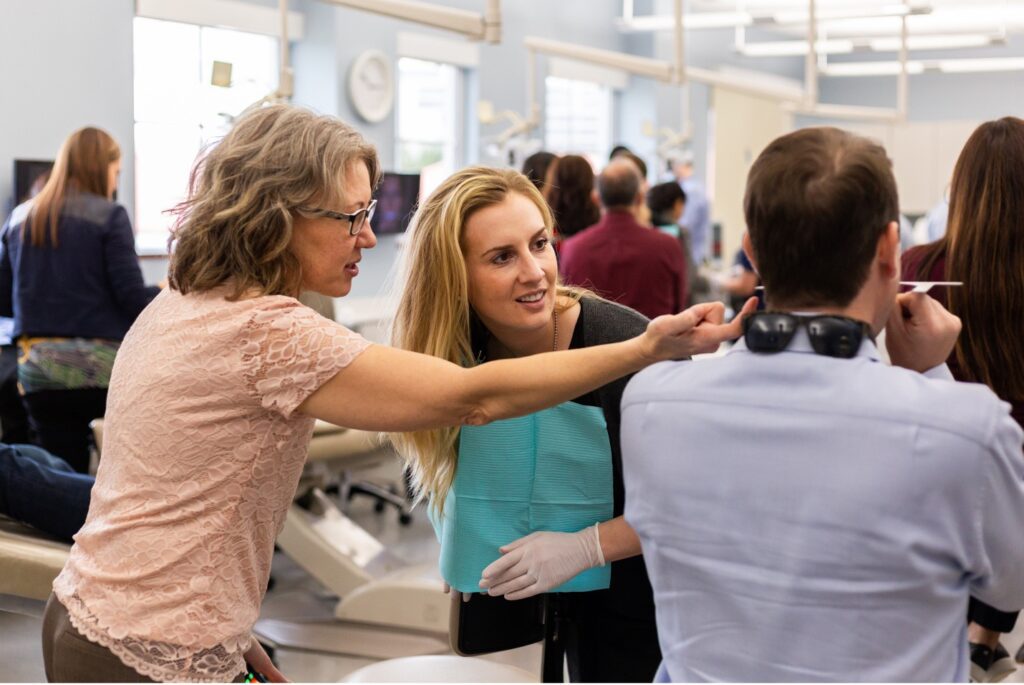
With no back teeth touching and contact on the centrals, try to clench and release two or three times while feeling your masseters.

Most of you will find your masseters do not move or move a lot less when no back teeth are touching. Some of you, even with your back teeth separated, can still clench in protrusive and can still increase the muscle activity almost the same amount as when your back teeth touch.

I do this exercise with my patients, but when they move into protrusive, I put a bite stop over their front teeth or have them bite on a Lucia jig we have lined for their bite registration. If you do this test with your patients, you can use an EMG or feel the muscle activity with your hands.

If the patient can still generate almost the same force or the same force with their back teeth separated, you have identified one of the around 15% of people who might not benefit significantly from occlusal therapy.

You’ve also identified someone who might not do well on an anterior-only appliance because, if they can generate that same force on just two teeth, they are at risk for those teeth becoming sore and moving.

Interested in Learning More?

Join me at The Pankey Institute with The Essentials Series.

Starting with Essentials 1, this series offers a comprehensive and structured approach to dental education.

Participants will gain essential knowledge and skills, enabling them to build a solid understanding of fundamental concepts in dentistry.

From fundamental principles to essential clinical techniques, this series lays the groundwork for a successful dental practice and provides a strong platform for further specialization.
Categories

Testimonials

Rosie, RDH

Rosie, RDH

I had the pleasure of working with Candy as a dental hygiene consultant over the course of several months, and her...
Read More

Rosie, RDH

I had the pleasure of working with Candy as a dental hygiene consultant over the course of several months, and her impact on both our hygiene department and overall practice was exceptional. Candy is highly knowledgeable, approachable, and genuinely invested in the success of the team. She is an excellent listener who takes the time to understand challenges and provide practical, effective solutions. One of the qualities I appreciated most was her accessibility, she was always available to answer questions, offer guidance, or return a call when needed. Her hands-on approach and commitment to helping our team succeed were evident in every interaction. Candy’s focus extends beyond productivity and practice growth; she truly cares about the people within the practice and works to create a supportive, collaborative environment. As a fellow dental hygienist, it was especially refreshing to work alongside someone who shares a similar philosophy and approach to patient care, team development, and practice success. We view many aspects of dentistry and hygiene through the same lens, which made collaboration seamless and productive. Having the opportunity to work with another hygienist who understands the challenges, opportunities, and importance of our role was invaluable. The hygiene modules she developed were incredibly valuable. They were well organized, easy to follow, and provided clear, actionable guidance. The accompanying handouts and resources gave our team the tools and confidence needed to implement new concepts successfully. Her training materials were practical, relevant, and tailored to the real-world needs of a busy dental practice. Candy’s expertise and dedication to excellence have made a lasting impact on our team. I would highly recommend her to any dental practice looking to strengthen its hygiene department, improve systems, and support the growth and success of its team. She is a true asset to any practice fortunate enough to work with her.
Rosie, RDH
Dr. Justin Elikofer

Dr. Justin Elikofer

Our story with IgniteDDS began almost five years ago when my wife and I purchased an established fee-for-service practice. At...

Read More

Dr. Justin Elikofer

Our story with IgniteDDS began almost five years ago when my wife and I purchased an established fee-for-service practice. At the time, we promised the team that everything would stay the same. The practice was thriving, and from the outside it seemed clear they had found a successful recipe for success. Our goal wasn't to change it—we simply didn't want to mess it up.

What we discovered was that while everyone wanted the outcome of success, there wasn't alignment around how we achieved it or measured it. Success in room 1 wasn't the same as Room 2. It took us nearly four years to fully understand that because we were doing well. During that time, we also realized we weren't leading as effectively as we could have been. We weren't communicating a clear vision, establishing consistent standards, or implementing clear protocols. Instead, we allowed people to continue doing things their own way. Some team members appreciated that freedom, while others felt frustrated by the lack of consistency and direction.

After four years, we found ourselves at a crossroads. We felt stuck. Morale was low and we weren't sure we could get the practice where we wanted it to go on our own.

As owners who value relationships as much as results, David immediately stood out to us. His personality was authentic, approachable, and trustworthy. He was someone we could see ourselves learning from and building a genuine relationship with. Being local was a bonus, but what really resonated with us was that his vision for practice growth, demonstrated through his own private practice, closely mirrored our own. He had already built the type of practice we wanted to create.

This stood in contrast to many other consultants we spoke with, whose focus seemed to be on PPO models and increasing volume. David's experience aligned with the type of practice we wanted to build: a high-touch, high-end patient experience centered on quality rather than quantity.

The IgniteDDS team—David, Dawn, and Candy—started by helping us understand where we truly stood. Through discovery, data gathering, and DISC assessments, they helped us identify opportunities for improvement and build a foundation for long-term growth. Rather than jumping straight to solutions, they gave us clarity.

Candy's coaching was instrumental in aligning our hygiene department and our office as a whole with the hygiene department. With her help, we were able to improve the patient experience and new patient process.

We also tackled practical issues that had become major challenges, including an accounts receivable system that was largely out of control. IgniteDDS didn't just point out problems—they provided systems and processes to solve them.

One of the most valuable aspects of the relationship was having experienced coaches to help us navigate team conflict and leadership challenges. As practice owners, those situations can feel isolating. Having a trusted team to walk through difficult conversations and decisions was invaluable.

Another large impact came through our office managers' work with Dawn. Rather than relying on the doctors to drive every initiative, IgniteDDS empowered our office managers to take ownership of the process and lead from within the organization. They embraced that responsibility wholeheartedly. No challenge was too large or too small. Dawn consistently met them where they were and helped them develop the confidence and skills to lead. The answer was rarely, if ever, "no." Instead, it was, "Let's figure out how."

Today, our practice is more aligned, more accountable, and better equipped to deliver the experience we've always envisioned. We have clearly defined protocols, team agreements, and expectations that simply didn't exist before. Our collections have improved significantly, particularly through implementing systems that helped us address and recover outstanding balances.

If we could offer one piece of advice to another practice owner considering IgniteDDS, it would be to identify the team members who are willing to take ownership and invest in their growth. Share your vision with the IgniteDDS team, trust the process, and allow them to help shape your team into the organization you want to become.

Working with IgniteDDS has been one of the most impactful investments we've made in our practice, our team, and our own growth as leaders. Are things perfect? No. Are we closer? Absolutely, yes!

Dr. Justin Elikofer
Dr. Sanjie Jackson

Dr. Sanjie Jackson

I was running on empty, and honestly, everyday I thinking of my exit strategy when I met Dr David Rice. ...
Read More

Dr. Sanjie Jackson

I was running on empty, and honestly, everyday I thinking of my exit strategy when I met Dr David Rice. As the sole owner of two dental practices, I knew I couldn't continue trying to do everything on my own. Not if I wanted to grow and lead at a higher level. Partnering with IgniteDDS has been, hands down, one of the best investments I've made for both my practices and my team. Just halfway through my first year with IgniteDDS, the impact has already been remarkable. The knowledge, systems, accountability, and leadership development they have provided have transformed the way we operate. Not only have I gained valuable tools and insights as an owner, but my entire team is getting empowered with skills and confidence that are helping us elevate every aspect of our patient experience and practice performance. What sets IgniteDDS apart is the genuine commitment they have to their clients' success. Their guidance is practical, actionable, and tailored to the everyday realities of me running two dental practices. I am incredibly grateful for Dr. David Rice, Dawn, Candy, and the entire IgniteDDS team. Their expertise, continuous encouragement, and unwavering support have made me feel like I am not alone on this journey. If you're a practice owner looking to strengthen your leadership, improve your systems, and create sustainable growth, I cannot recommend IgniteDDS highly enough. The value they provide is truly exceptional, and I am excited to see what the rest of this journey brings.
Dr. Sanjie Jackson
Alyse Berta

Alyse Berta

Dawn, thank you for the great advice and guidance you’ve shared as we work on improving our practice's efficiency. I...
Read More

Alyse Berta

Dawn, thank you for the great advice and guidance you’ve shared as we work on improving our practice's efficiency. I truly appreciate your support and the time you’ve taken to help us move forward in a more streamlined and effective way. Your insight has been incredibly valuable and is helping us make meaningful progress.
Alyse Berta
Dani S.

Dani S.

IGNITEDDS has made a real difference in our practice and in my role as office manager. The support I’ve received has...
Read More

Dani S.

IGNITEDDS has made a real difference in our practice and in my role as office manager. The support I’ve received has helped me grow with more confidence and clarity, and our systems and leadership have improved because of it. Dawn has been an incredible support to me personally, always present, approachable, and truly invested in our success. I never feel alone when challenges come up, and that level of guidance and encouragement has been invaluable. IGNITEDDS doesn’t just support practices; they support the people behind them.
Dani S.
Eva B.

Eva B.

Working with IGNITEDDS Coaching has been such a great experience! Having David as a dentist makes a huge difference. He truly...
Read More

Eva B.

Working with IGNITEDDS Coaching has been such a great experience! Having David as a dentist makes a huge difference. He truly understands the day-to-day challenges we face in practice. His insight makes their guidance practical, relevant, and easy to implement. Working alongside Dawn has been such a gift! She’s always available to answer questions, talk through ideas, and help us find the right solutions. Her advice is thoughtful, effective, and supportive. It hasn’t just helped me, it’s positively impacted our entire team and elevated our patient experience. I’m incredibly grateful to partner with Ignite as we continue to grow, strengthen our team, and serve our patients at a higher level.
Eva B.
Kylinn Tucker, RDH

Kylinn Tucker, RDH

I had an amazing experience with the IGNITEDDS Coaching program. Especially since I am a new hygienist, everything...
Read More

Kylinn Tucker, RDH

I had an amazing experience with the IGNITEDDS Coaching program. Especially since I am a new hygienist, everything you guys shared was so helpful. It’s evident that you guys prioritize each individual team member of a dental office and do everything you can to make the environment and schedule run as smoothly and efficiently as possible. I learned so much about treatment planning, Dentrix, scheduling, teamwork, and overall ways to continue improving as a new grad. I wish every dental office had the opportunity to complete this program.
Kylinn Tucker, RDH
Dr Ben Truong

Dr. Ben Truong

It was great working with a team to help bring out the best in each of us. Our team is ...
Read More

Dr. Ben Truong

It was great working with a team to help bring out the best in each of us. Our team is small, but we work closely together to provide a great patient experience, while having fun at work as well! Your team was able to help us learn to work together, with each person having a vital role in providing care to the patient! Helping us all become streamlined and on the same page will help us become an even more successful practice!
Dr Ben Truong
Dr. Ronnetta Sartor

Dr. Ronnetta Sartor

The 90-Day Jump Start has been transformative for our office. Dawn and Dr. Rice guided us through implementing essential systems ...
Read More

Dr. Ronnetta Sartor

The 90-Day Jump Start has been transformative for our office. Dawn and Dr. Rice guided us through implementing essential systems and processes, from new patient calls to treatment planning and case acceptance. Their focus on patient care and team accountability has helped us create better structure, improve work/life balance, and stay aligned with our goals. In a short time, our practice has grown tremendously.
Dr. Ronnetta Sartor
Dr. Chandler Oldenburg

Dr. Chandler Oldenburg

IGNITEDDS has been truly transformative for our practice. Within just a few months, our accounts receivable collections increased by $30K, ...
Read More

Dr. Chandler Oldenburg

IGNITEDDS has been truly transformative for our practice. Within just a few months, our accounts receivable collections increased by $30K, and our operations became far more streamlined. Their clear procedures and policies gave our team structure and confidence, while their step-by-step ownership guidance addressed our specific challenges. Thanks to David and Dawn, we feel more organized, empowered, and aligned than ever before. I highly recommend IGNITEDDS to any practice ready to grow and strengthen its foundation.
Dr. Chandler Oldenburg

Dr. Lee Ann Brady

Dr. Lee Ann Brady lives in Phoenix, Arizona with her husband Kelly and three children Sarah, Jenna and Kyle. She owns Desert Sun Smiles Dental Care, a private restorative practice in Glendale, Arizona. Outside of her private practice, Dr. Brady is the Director of Education for The Pankey Institute, recognized for hands-on education programs focused on occlusion and restorative dentistry. She is the founder and lead curator of Restorative Nation, a supportive learning community for dentists.

x

Join Us

Become a Preferred Partner

Join as a preferred partner to unlock growth, visibility, and strategic collaboration opportunities.

No Thanks