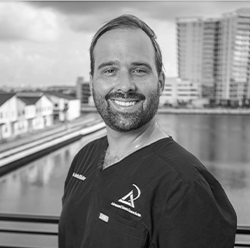
By: Candy Velez, CRDH, BSDH, IgniteDDS Dental Hygiene Coach
Missed Part 1? Read it here: Would Your Hygienist Recruit for You?
Missed Part 2? Read it here: “That’s Just Dentistry.” But Does It Have to Be?
Why Solving the Workforce Shortage Means Giving People Reasons to Stay
We need more people in dentistry, and therefore, much of the workforce shortage conversation focuses on how we attract more people: more students, more graduates, and more people entering dental careers.
But there is another side of the equation:
How long do we keep them?
Imagine we became incredibly successful at recruiting the next generation into dentistry. Still, many of those people eventually decide the career is no longer one they want or can sustain. We would still have a workforce shortage. We would simply be working harder to replace the people leaving.
Recruitment fills the pipeline. Retention protects it.
Which raises a question I think those of us already in dentistry should be willing to ask ourselves:
Knowing what you know now, would you choose dentistry again?
And would you recommend the career to someone you care about?
If the answer is no, or even “I’m not sure,” I think we should be very interested in why. Because if we wouldn’t choose the experience ourselves, how can we expect the next generation to?
A Career Should Be Designed to Last
Dentistry is demanding. That isn’t necessarily a problem. Meaningful careers can be physically, mentally, and emotionally challenging.
But there is a difference between a career that challenges people and one that becomes unnecessarily difficult to sustain.
Think about a hygienist’s career. At 25, seeing patients clinically four or five days a week may feel completely sustainable. But does a successful 30- or 40-year career have to mean doing the same work, at the same pace, until retirement?
What if the career could evolve with the person?
An experienced clinician might continue providing patient care while also mentoring younger clinicians, onboarding new team members, leading technology implementation, educating patients, developing systems, or contributing in another area where years of clinical experience have tremendous value.
The answer won’t look the same for everyone, but the bigger idea is this:
People shouldn’t have to leave dentistry for their careers to evolve.
When we retain an experienced professional, we aren’t simply keeping another person on the schedule. We keep years of knowledge, relationships, judgment, and experience in the profession. Creating opportunities for career longevity can help experienced professionals continue contributing their knowledge and skills to dentistry.
What Are We Designing For?
Creating careers people want to stay in may also require us to expand how we define a healthy dental practice.
What if we considered four things?
Patient Health. Practice Health. Team Health. Human Health.
- Patient health: Are we creating an environment where patients can receive exceptional care and achieve better health?
- Practice health: Is the business profitable, stable, and able to invest, grow, and weather challenges?
- Team health: Do people have the clarity, resources, systems, and support they need to work well together?
- And then there is human health. It asks something much more fundamental:
Can people perform at a high level here without their own wellbeing becoming the resource the system continually consumes?
Human health isn’t about making dentistry easy. It’s about creating a career someone can work hard at and still imagine doing years from now.
Give People Reasons to Stay
Retention doesn’t begin when someone gives notice. It is built throughout the career.
That may mean creating different career paths as people grow. It may mean looking differently at flexibility, time away from work, benefits, professional development, physical demands, or how work changes through different seasons of life.
Not every practice can offer the same things, nor should they have to.
The opportunity is to stop assuming there is only one way a dental career has to look. A small private practice may create something completely different from a large group practice. What works for someone early in their career may look different from what they value twenty years later.
Strategies to recruit and retain hygienists can help practices think more intentionally about what makes dental professionals want to stay.
The question isn’t:
“What benefits should every dental practice offer?”
It’s:
“What could we create here that would make great people want to build a career here?”
That is a workforce strategy too. Building team member engagement and creating a better workplace culture are also part of giving people reasons to stay.
Keep the Back Door in the Conversation
Dentistry needs more people coming through the front door, but we also need to pay attention to how many talented people are quietly leaving through the back one.
We measure enrollment. We measure graduates. We measure vacancies.
We should also care deeply about career longevity.
How many years can someone thrive in this profession? Can their career grow with them? Can they build a good life while doing meaningful work? And after experiencing dentistry for themselves, can they confidently tell the next generation:
“Yes. I would choose it again.”
If the answer is no, we shouldn’t accept that as an unfortunate reality of the profession.
We should see it as a reason to change it.
Because solving the workforce shortage isn’t just about convincing more people to enter dentistry.
It’s about creating a profession the people who know it best would still choose and proudly encourage the next generation to choose too.