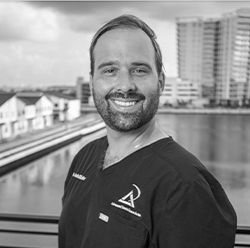
Dr. Leonard Hess, DDS

Dr. Leonard Hess, DDS

Dr. Leonard Hess began teaching continuing education courses in 2005, and the topics include occlusion, smile design, treatment planning, preparation design, and practice integration of complete dentistry.

He’s taught full-day continuing education courses at the American Academy of Cosmetic Dentistry’s national meeting, The Greater New York Dental Meeting, AACD National Meeting, Pacific Dental Conference, Ontario Dental Association meeting, and The Yankee Dental Conference.

Dr. Hess also has taught courses in Japan, Germany, Poland, China, and Canada.

Dr. Hess is currently serving as the Senior Clinical Director at The Dawson Academy. He also owns Union County Center for Comprehensive Dentistry in Charlotte, North Carolina.

dawson academy complete dental examinations

Complete Examinations in Dentistry

By: Dr. Leonard A. Hess, DDSClinical Director, The Dawson AcademyThe Article Originally Appeared on TheDawsonAcademy.com. Dr. Hess…

Read More
how to track key dental practice performance metrics

How To Track Key Dental Practice Performance Metrics

By: Dr. Leonard A. Hess, DDSClinical Director, The Dawson AcademyThe Article Originally Appeared on TheDawsonAcademy.com Measure What’s…

Read More
phone greeting tips for dental offices

Top Phone Greeting Tips for Dental Practices

By: Dr. Leonard A. Hess, DDSClinical Director, The Dawson AcademyThe Article Originally Appeared on TheDawsonAcademy.com In today’s…

Read More

How to Master a Complete Dental Examination

By: Dr. Leonard A. Hess, DDS, Clinical Director, The Dawson AcademyThis article originally appeared on TheDawsonAcademy.com, Dr….

Read More
How Do You Know If You Achieved Centric Relation? By: Dr. Leonard A. Hess, DDS Clinical Director, The Dawson Academy This article originally appeared on TheDawsonAcademy.com, Dr. Hess allowed igniteDDS to share with our readers. When we talk about utilizing bimanual manipulation as a way to get centric relation, one of the biggest misunderstandings we see is the tendency for dentists to think CR is achieved by forcing the jaw back to seat the condyles. When we are in a situation where we have a tight patient, or patients that are resisting, the worst thing we can do is force it. Bimanual manipulation provides verification of: The correctness of the physiologic position The alignment of the condyle-disk assembly The integrity of the articular surfaces Steps to Achieving Centric Relation Recline the patient so your arms are parallel to the floor and their chin is pointing up. Stabilize the patient’s head by cradling it between your rib cage and forearm. It is essential that the head be stabilized with a firm grip so it will not move when the mandible is being manipulated. Lift the patient’s chin to slightly stretch the neck, keeping your forearms parallel to the floor. Gently position the four fingers of each hand on the lower border of the mandible. The little finger should be slightly behind the angle of the mandible. The pads of your fingers should align with the bone and stay together as if you were going to lift the head. Bring the thumbs together to form a C with each hand. The thumbs should fit in the notch above the symphysis. Remember, NO PRESSURE should be applied. With a gentle touch, and with almost zero pressure from your hands, have the patient slowly hinge open and closed in rotation (an arc of 1-2mm is acceptable), never letting the teeth touch. Do not jiggle or load the joint at this point. The whole idea here is to let the condyles go to where they physiologically want to be – properly seated in each fossa. When the hinge movement is consistent, the mandible will retrude automatically and you should feel the jaw go back. At that point, hold the jaw firmly on that hinge point. With proper hand placement, there is a torque effect from the thumbs and fingers that loads the joints in an upward and forward direction. This allows upward pressure to be maintained through the condyles while still allowing them to rotate freely. Load the joint by applying firm (but gentle) pressure UP with the fingers on the back half of the mandible and DOWN with the thumbs in the notch above the symphysis (keeping the teeth separated). Note: Sudden heavy loading can injure retrodiskal tissue and cause considerable pain. Ask the patient, Do you feel any tension or tenderness in either joint? If yes, stop and determine the cause. If no, continue. Increase to moderate pressure, then firm pressure. With each increment of loading, ask the patient, “Do you feel ANY tension or tenderness in either joint?”. If tension or tenderness is experienced at any load interval, stop and determine the cause. The dense vascular connected tissue that makes up the disk will be able to handle enormous pressure through it without any sort of tenderness if you have a properly aligned condyle-disk assembly, and that condyle is completely seated. And if the condyle is seated completely, such that the medial aspect of the condyle is engaged with the medial aspect of the glenoid fossa with a properly inter-closed disk, then there can’t be any stretching of the muscle. What It Looks Like When the Condyle is Not Completely Seated in Centric When you load test, there will be a tension on that lateral pterygoid, and they will feel some tightness or fullness or a pull. Because of this feeling, they’ll have awareness in that joint. If there’s pathology in the joint or an intracapsular problem, they’re likely to have some sort of discomfort or tenderness. But also, remember that as we assess the joint, we’re relying on the totality of the exam; the questions that we ask, the palpation of the muscles, the load testing, the range of motion, doppler analysis, all these things that we do, to develop a visual picture of what’s going on there. But the short answer to, how do you know if you’ve achieved centric relation, is by load testing; by load testing in three pressure increments and making sure there is no tension or tenderness in either joint. If a Patient Has Had a Lower Block, You Can Still Put Them in Centric Relation Anesthesia locking the trigeminal nerve really doesn’t have any effect whatsoever on whether you can achieve centric or not. Those are sensory nerves and we’re not really messing with the motor. The fact is, we’re going to take bilateral manipulation to achieve centric relation, whether they’re numb or not. And the technique is going to be exactly the same. You can actually achieve centric relation even if the patient is asleep. We’ve done a number of bite records while the patients were under Pentathol. It’s exactly the same as when they’re awake. Just remember, when you’re putting a patient in centric relation, it’s the natural physiological hinge of the joint you’re looking for. If you’ve previously taken Core 2: Examination & Records with us, I encourage you to review all the principles in the book (Chapter 9: Determining Centric Relation) and in the manual, as well as what we taught in class. If you haven’t taken the Examination & Records course, we spend a day and a half doing load testing, so that students get very comfortable with the hand position and how to get repeatable precise results.

How Do You Know If You Achieved Centric Relation?

By: Dr. Leonard A. Hess, DDSClinical Director, The Dawson AcademyThis article originally appeared on TheDawsonAcademy.com, Dr. Hess…

Read More
tmj patient

TMJ 101: The Best TMD Treatment Options For Dentists

By: Dr. Leonard A. Hess, DDSClinical Director, The Dawson AcademyThis article originally appeared on TheDawsonAcademy.com, Dr. Hess…

Read More
dentist checking patient for fremitus

What is Fremitus and Why Should You Check For It?

By: Dr. Leonard A. Hess, DDSClinical Director, The Dawson AcademyThis article originally appeared on TheDawsonAcademy.com, Dr. Hess allowed igniteDDS to…

Read More
prepping second molars

Dentist Education: How Do I Predictably Prep Second Molars?

By: Dr. Leonard A. Hess, DDSClinical Director, The Dawson AcademyArticle originally appeared on TheDawsonAcademy.com, Dr. Hess allowed…

Read More
Sequencing a Full-Mouth Rehab: Anterior or Posteriors First?

Sequencing a Full-Mouth Rehab: Anterior or Posteriors First?

The correct sequence to begin a full-mouth rehab is tobegin with the anterior teeth first, particularly the…

Read More
patients who have more pain after wearing a b-splint

Q&A with Dr. Hess: Patients Who Have More Pain After Wearing a B-Splint

By: Dr. Leonard A. Hess, DDSClinical Director, The Dawson AcademyThe Article Originally Appeared on TheDawsonAcademy.com Question: What…

Read More

Oral Appliance Therapy for Sleep-Disordered Breathing

By Dr. Mark Murphy, DDS | February 16, 2026

By: Mark T. Murphy, DDS This article originally appeared on PankeyGram.Org. Dr. Murphy granted permission for igniteDDS to share with our readers. Dentists are in a unique position to recognize the critical role sleep plays in systemic health. Research has confirmed that untreated sleep apnea significantly increases the risk of: With more consumer wearables tracking sleep…

Top 5 Mistakes New Dentists Make When Buying Their First Practice & How to Avoid Them

By David Rice | February 16, 2026

By: Dr. David Rice Buying your first dental practice is one of the most exciting — and daunting — decisions you’ll ever make. When you do it right, it’s your launchpad to fulfillment, wealth, and a self-determined future. When you do it wrong, it can trap you in stress, burnout, and financial struggle. As we…

How Dentistry Affects the People You Love: Part 2

By Sable Muntean | February 9, 2026

Why Dental Professionals Struggle With Emotional Availability By: Dr. Sable Muntean After a long day at the office, it’s natural to feel drained. But when fatigue becomes emotional distance, relationships begin to suffer. Emotional availability—the ability to be fully present and engaged with the people you love—is critical for maintaining strong connections, yet it’s often…

The Year-End Bonus Headache No One Warned You About

By Garrett Wilson | February 9, 2026

By: Garrett Wilson As we head into the start of 2026, it’s worth reflecting on what happened in 2025 so we don’t repeat the same mistakes. Few topics created more tension at year-end than bonuses and holiday gifts. If you spend any time in dental social media groups, you saw it firsthand—frustration from employees and…

Beautiful Smile Design Case using a Fully Digital Workflow

By John Cranham, DDS | February 9, 2026

By:  John C. Cranham, DDS This topic originally appeared on Pankey.org. Dr. Cranham granted permission for igniteDDS to share with our readers. My professional journey in dentistry has been deeply influenced by my time in the Pankey Institute and other continuing education courses. My early career focused on integrating cosmetic digital dentistry with sound occlusal concepts….

Want Better Results? Make It Easier

By Candy Velez - CRDH, BSDH | February 9, 2026

Remove Friction – Unlock Consistency By: Candy Velez, CRDH, BSDH, IgniteDDS Dental Hygiene Coach The Question That Changes Everything How Are We Making It Easy? Most dental teams want to do excellent work. They want to accurately diagnose, thoroughly document, and provide care that truly supports long-term health. Yet despite good intentions, consistency often slips….

How Dentistry Affects the People You Love: Part 1

By Sable Muntean | February 2, 2026

How Dentistry Quietly Changes Your Relationships By: Dr. Sable Muntean Dentistry is a deeply rewarding profession. Every day, you transform smiles, ease pain, and build trust with your patients. But behind the satisfaction lies a hidden cost—your personal relationships. If you’ve ever felt tension at home after a long day, noticed that your partner seems…

Busy ≠ Profitable: The February Reality Check Every Practice Owner Needs

By David Rice | February 2, 2026

By: Dr. David Rice While January often feels like a fresh start – schedules filling fast – production firing on all cylinders – and that sense that this is the year everything finally clicks … Like our diet and gym new year’s resolutions – February arrives and … The practice is still busy, but stress…

The Sugar Crisis: The Link to Oral-Systemic Health

By Dr. Paul Henny, DDS | February 2, 2026

By: Paul Henny, DDSThis topic originally appeared on PankeyGram.org. Dr. Henny granted permission for igniteDDS to share with our readers. According to the CDC, one in three Americans will be diabetic by 2050 if we don’t make significant course corrections. By that same time, 42% of the population is expected to be obese, a condition…

Why the Money Isn’t Showing Up: Part 2

By Dawn Patrick | February 2, 2026

The Front Desk Systems That Make or Break Cash FlowDid you miss Part One? Catch up on Why the Money Isn’t Showing Up, Part 1 👉  By: Dawn Patrick, COO and Dental Business Strategy Coach, IgniteDDS Let’s be honest — Cash flow problems usually don’t start with insurance. They start with unclear financial conversations. 1….