By: Lee Culp, CDT
This article originally appeared on PankeyGram.org. igniteDDS was granted permission to share with our readers.
For years, creating dentures was a time-consuming process, requiring multiple patient visits, manual wax-ups, and trial-and-error adjustments. However, the rise of digital dentistry has revolutionized denture fabrication.
From AI-assisted design to dental 3D printing, digital workflows have made dentures more precise, efficient, and accessible. Today, dentures are no longer just an analog process—they are a key component of digital prosthodontics.
How Digital Workflows Have Transformed Denture Fabrication
One of the biggest advantages of digital dentures is efficiency. While analog dentures could take hours to fabricate, digital dentures can often be completed in as little as 45 minutes from start to finish. Traditional dentures required multiple impressions, bite registrations, and wax trials before finalizing a case.
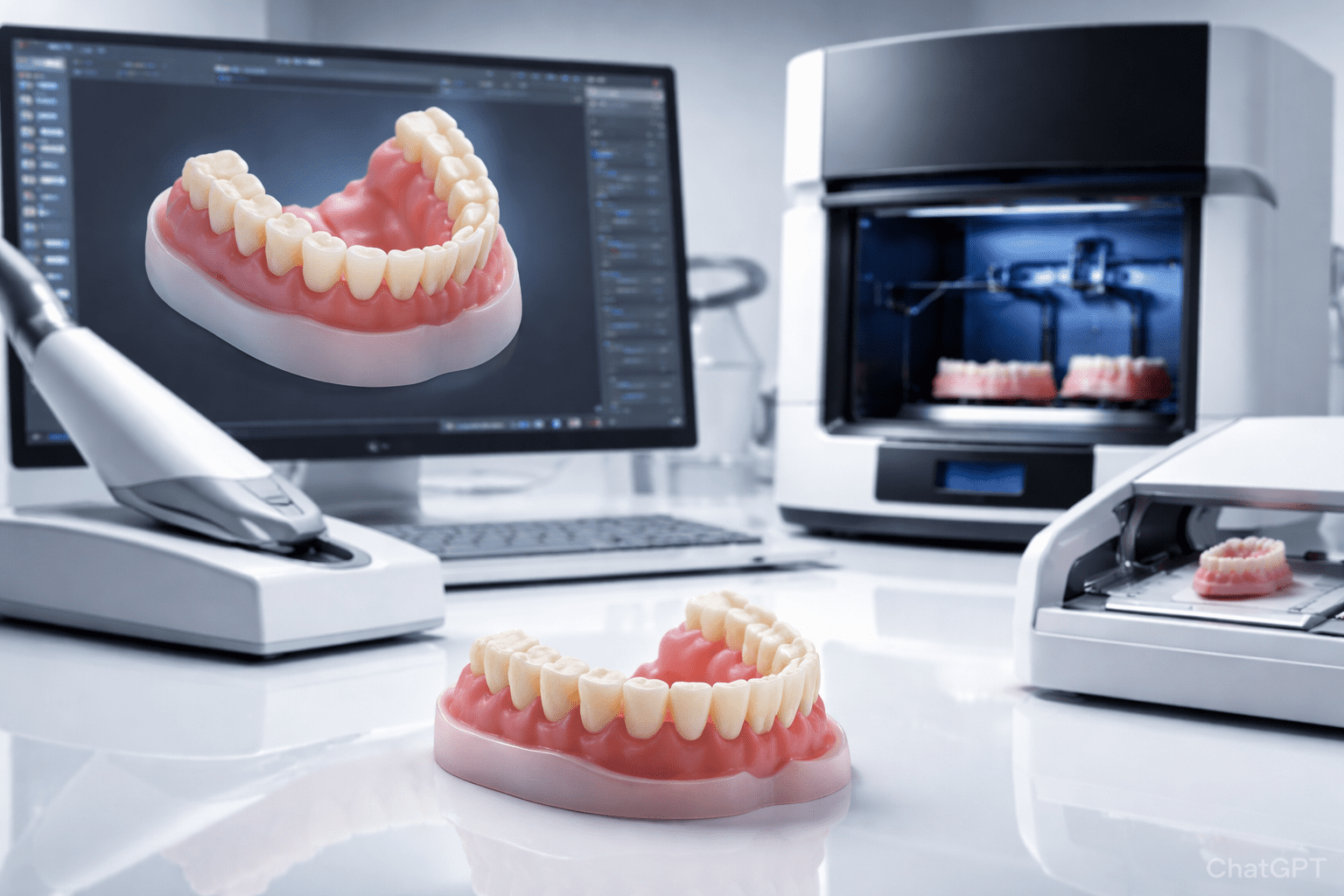
Digital workflows streamline these steps, typically including:
- Scanning intraoral impressions or existing dentures
- Using AI software to design the prosthesis
- Dental milling or dental 3D printing of the base and teeth
- Bonding the teeth into the base with digital precision
The key difference is that each stage builds on previous data, eliminating the need to start over with each adjustment. If the initial design is successful and the patient approves, the same design moves forward through every stage.
Smarter Digital Denture Design with AI
Artificial intelligence has significantly impacted denture workflows. Tasks that once took hours, like converting CT scans into clean STL files, can now be done in about five minutes. AI also assists in denture design by:
- Auto-aligning scans with anatomical landmarks
- Suggesting ideal tooth positioning based on facial structure
- Improving occlusal balance by analyzing bite forces
This automation allows labs to process more cases with greater accuracy, reducing errors and remakes while improving overall patient outcomes.
Dental Milling, 3D Printing, or a Hybrid Approach
Both 3D printing and dental milling are central to the digital denture revolution. Each method offers unique advantages:
- 3D Printing: Rapid turnaround, cost-effective, excellent for preliminary try-ins.
- Dental Milling: Offers superior strength, especially with multi-layered discs that combine the base and teeth.
- Hybrid Approach: Combines printing for initial work and milling for long-term durability, often yielding the best results.
Some advanced systems, like Ivoclar discs, even allow milling of both the denture base and teeth together, though aesthetic customization may still require additional work.
Immediate Dentures and Guided Prosthetics
Digital workflows have greatly improved immediate dentures by allowing precise pre-planning. Two common approaches include:
- Scan and Duplicate: Existing dentures are scanned, refined, and printed as a new set without multiple visits.
- Digital Extractions and Design: For patients with remaining teeth, software can simulate extractions and design dentures based on predicted tissue response, enabling immediate post-surgery delivery.
This precision reduces post-delivery adjustments and improves fit. Today, most dentures are designed with implant treatment planning in mind, moving beyond removable prosthetics to implant-supported solutions. For more, see my previous blog on Advances in Digital Implantology.
The Future: Augmented Reality, AI, and Implant Integration
Digital dentures are just the beginning. Emerging technologies will further transform prosthodontics:
- Augmented Reality (AR): Allows patients to visualize denture aesthetics and function before fabrication.
- Advanced AI Models: Predict long-term wear patterns and automatically adjust occlusion for durability.
Traditional wax-up dentures are gradually fading as AI-powered design, 3D printing, and virtual patient modeling take center stage. Digital workflows reduce chair time, enhance patient satisfaction, and achieve superior long-term results.
Expand Your Expertise
For practitioners looking to deepen their understanding of digital workflows, consider the 1-year Digital Mastery online residency led by Dr. John Cranham. This hands-on course covers:
- Complex esthetic cases
- Occlusion management
- Implant dentistry
- TMJ issues
- Interdisciplinary challenges
By leveraging state-of-the-art digital workflows, participants learn to handle advanced prosthodontic cases with confidence and precision.