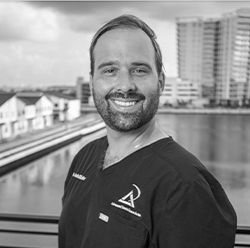
Dr. Justin Elikofer
Our story with IgniteDDS began almost five years ago when my wife and I purchased an established fee-for-service practice. At the time, we promised the team that everything would stay the same. The practice was thriving, and from the outside it seemed clear they had found a successful recipe for success. Our goal wasn't to change it—we simply didn't want to mess it up.
What we discovered was that while everyone wanted the outcome of success, there wasn't alignment around how we achieved it or measured it. Success in room 1 wasn't the same as Room 2. It took us nearly four years to fully understand that because we were doing well. During that time, we also realized we weren't leading as effectively as we could have been. We weren't communicating a clear vision, establishing consistent standards, or implementing clear protocols. Instead, we allowed people to continue doing things their own way. Some team members appreciated that freedom, while others felt frustrated by the lack of consistency and direction.
After four years, we found ourselves at a crossroads. We felt stuck. Morale was low and we weren't sure we could get the practice where we wanted it to go on our own.
As owners who value relationships as much as results, David immediately stood out to us. His personality was authentic, approachable, and trustworthy. He was someone we could see ourselves learning from and building a genuine relationship with. Being local was a bonus, but what really resonated with us was that his vision for practice growth, demonstrated through his own private practice, closely mirrored our own. He had already built the type of practice we wanted to create.
This stood in contrast to many other consultants we spoke with, whose focus seemed to be on PPO models and increasing volume. David's experience aligned with the type of practice we wanted to build: a high-touch, high-end patient experience centered on quality rather than quantity.
The IgniteDDS team—David, Dawn, and Candy—started by helping us understand where we truly stood. Through discovery, data gathering, and DISC assessments, they helped us identify opportunities for improvement and build a foundation for long-term growth. Rather than jumping straight to solutions, they gave us clarity.
Candy's coaching was instrumental in aligning our hygiene department and our office as a whole with the hygiene department. With her help, we were able to improve the patient experience and new patient process.
We also tackled practical issues that had become major challenges, including an accounts receivable system that was largely out of control. IgniteDDS didn't just point out problems—they provided systems and processes to solve them.
One of the most valuable aspects of the relationship was having experienced coaches to help us navigate team conflict and leadership challenges. As practice owners, those situations can feel isolating. Having a trusted team to walk through difficult conversations and decisions was invaluable.
Another large impact came through our office managers' work with Dawn. Rather than relying on the doctors to drive every initiative, IgniteDDS empowered our office managers to take ownership of the process and lead from within the organization. They embraced that responsibility wholeheartedly. No challenge was too large or too small. Dawn consistently met them where they were and helped them develop the confidence and skills to lead. The answer was rarely, if ever, "no." Instead, it was, "Let's figure out how."
Today, our practice is more aligned, more accountable, and better equipped to deliver the experience we've always envisioned. We have clearly defined protocols, team agreements, and expectations that simply didn't exist before. Our collections have improved significantly, particularly through implementing systems that helped us address and recover outstanding balances.
If we could offer one piece of advice to another practice owner considering IgniteDDS, it would be to identify the team members who are willing to take ownership and invest in their growth. Share your vision with the IgniteDDS team, trust the process, and allow them to help shape your team into the organization you want to become.
Working with IgniteDDS has been one of the most impactful investments we've made in our practice, our team, and our own growth as leaders. Are things perfect? No. Are we closer? Absolutely, yes!