Miss Case Acceptance Part 3? Catch up here!
We talk a lot about digital workflows in the context of efficiency and clinical precision, and those benefits are real. But one of the most underrated advantages of going digital is what it does for case acceptance.
Patients say yes more often when they can see, understand, and trust what you’re recommending. Digital tools, used well, make all three of those things easier.
CBCT Imaging: Show Them the Problem in 3D
There’s a meaningful difference between telling a patient they have inadequate bone volume and showing them a 3D reconstruction of their own jaw. One is your word. The other is their anatomy, right there on the screen.
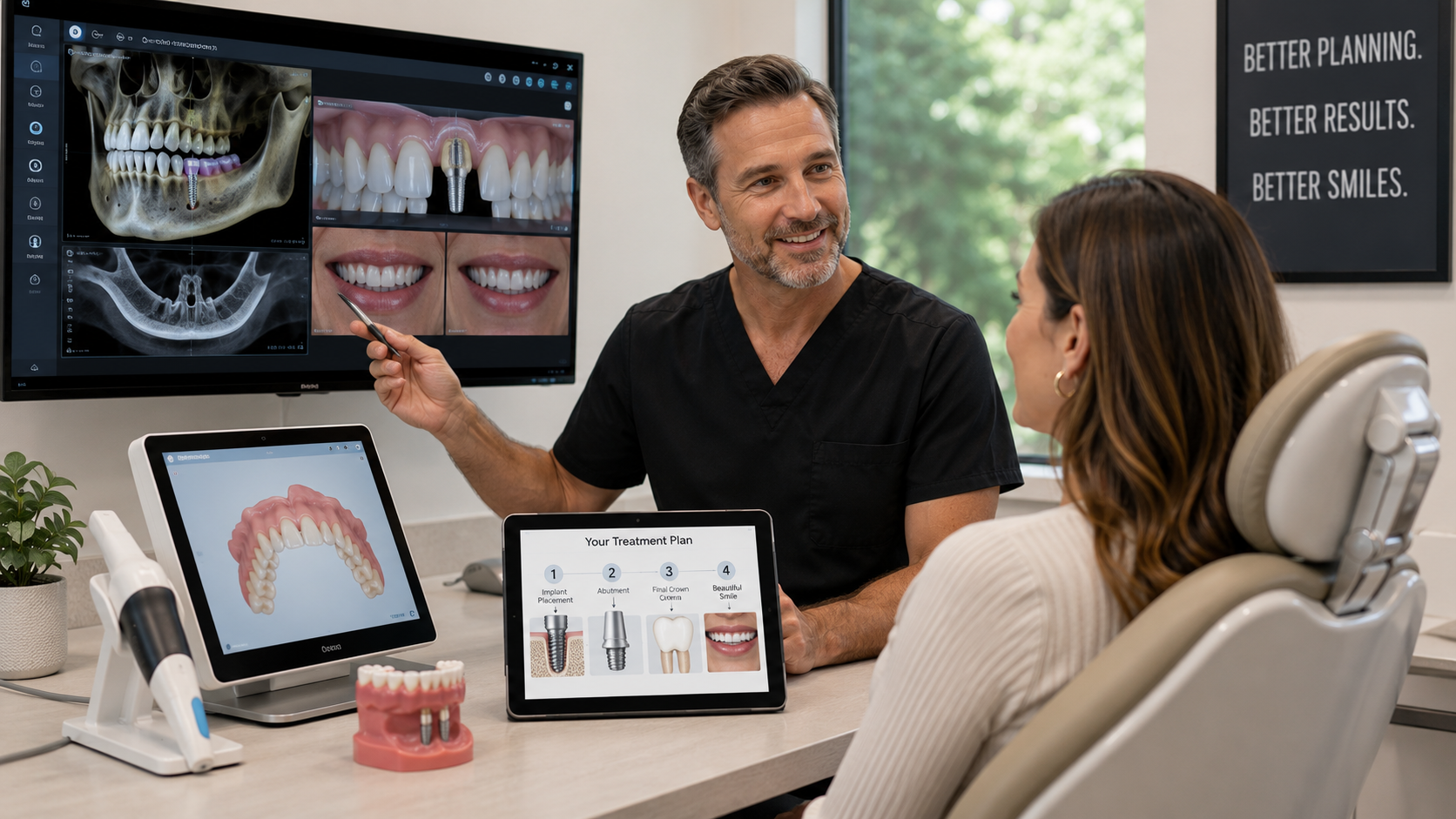
When patients can see the clinical reality — where the bone is, where it isn’t, what the implant placement will look like — it shifts the conversation from “I’ll think about it” to “what do we do next?” Many practices report a noticeable uptick in case acceptance after integrating CBCT into their implant consultations simply because of this visualization effect.
Digital Smile Design: Sell the Outcome Before the Procedure
If you’re not showing patients a simulation of their result before treatment, you’re leaving a major persuasion tool on the table.
Digital smile design software lets you generate a preview of what the final restoration could look like, adjusted for their face, their existing anatomy, their preferences. It turns an abstract concept into something they can look at, react to, and emotionally commit to. When a patient has already “seen” their new smile, saying yes to the treatment feels like saying yes to something real.
Intraoral Scanning: Make the Experience Part of the Pitch
The physical impression tray is most patients’ least favorite part of the appointment. An intraoral scan is fast, comfortable, and frankly a little impressive.
Patients notice when a practice is using current technology. It signals investment, precision, and a commitment to their experience. That perception carries forward into how they view your treatment recommendations. If you’re using leading technology to diagnose and plan, they assume you’re using it to treat, and that builds confidence.
Treatment Planning Software: Give Them a Visual Roadmap
Walking a patient through an implant case using planning software, showing the proposed implant position relative to their existing anatomy, the abutment, the crown, demystifies the whole procedure.
It also gives you a natural structure for the conversation: here’s where we start, here’s where we’re going, here’s the final result. That narrative clarity reduces anxiety and increases commitment.
A Word of Caution: Don’t Let the Tech Become the Consultation
Digital tools enhance the patient conversation. They don’t replace it.
The practices that use technology most effectively are the ones where the dentist is still making eye contact, asking questions, and listening. The scan is a prop, not a script. If you’re spending more time clicking through software than talking with your patient, you’ve flipped the priority.
Used intentionally, digital workflows don’t just improve your clinical outcomes. They improve the conversations that get you there.