By: Ronda Holman
One of the fastest ways for a young dentist to become frustrated in practice ownership is repeated equipment failure. A sensor suddenly stops reading. A scanner tip becomes damaged. A Diagnodent starts acting erratically. Before long, the question starts to creep in:
“Is my team destroying this equipment… or is this just normal wear and tear?”
The truth is, both scenarios happen every day in dentistry.
Modern dental technology has dramatically improved patient care and efficiency, but many newer dentists were never taught the expected lifespan of these devices in dental school. Without knowing what is “normal,” it becomes difficult to determine whether repeated repairs are due to improper handling, lack of systems, or simply equipment aging out.
Understanding the average shelf life of common dental equipment can help eliminate unnecessary tension between doctors and team members while also helping offices create better handling protocols, training systems, and budgeting plans.
Corded Digital X-Ray Sensors
These are among the most expensive and most commonly damaged pieces of equipment in a dental office.
Average Expected Lifespan: Typically 5–8 years with proper handling. Some offices may get 10 years from a sensor, while high-volume practices may experience failure sooner depending on daily use, storage habits, and operator technique.
Common Causes of Premature Failure:
- Bending or twisting the cord repeatedly
- Pulling the sensor by the wire instead of the body
- Dropping the sensor
- Patients biting aggressively on the sensor
- Storing sensors loosely in drawers
- Rolling over cords with stools
- Excessive disinfectant saturation near cord connections
The cord connection point is often the first area to fail because it experiences constant flexing throughout the day.
Signs the Failure May Be Wear-and-Tear:
- Gradual image distortion over time
- Intermittent connectivity after years of daily use
- Dead pixels appearing slowly
- Cracking near high-flex points after several years
Signs Handling May Be Contributing:
- Multiple sensors failing within short timeframes
- Frayed cords
- Sharp kinks in wiring
- Cracked sensor casings
- Frequent drops
- Sudden complete failure shortly after impact
Helpful Office Systems: Young dentists should avoid assuming damage is intentional or careless before evaluating systems. Many teams were simply never taught proper sensor handling protocols.
Consider:
- Using cord protectors
- Training assistants to loop cords loosely
- Creating designated storage locations
- Educating patients not to bite forcefully
- Assigning responsibility for end-of-day inspection
Sometimes the problem is not the employee. It is the absence of a system.
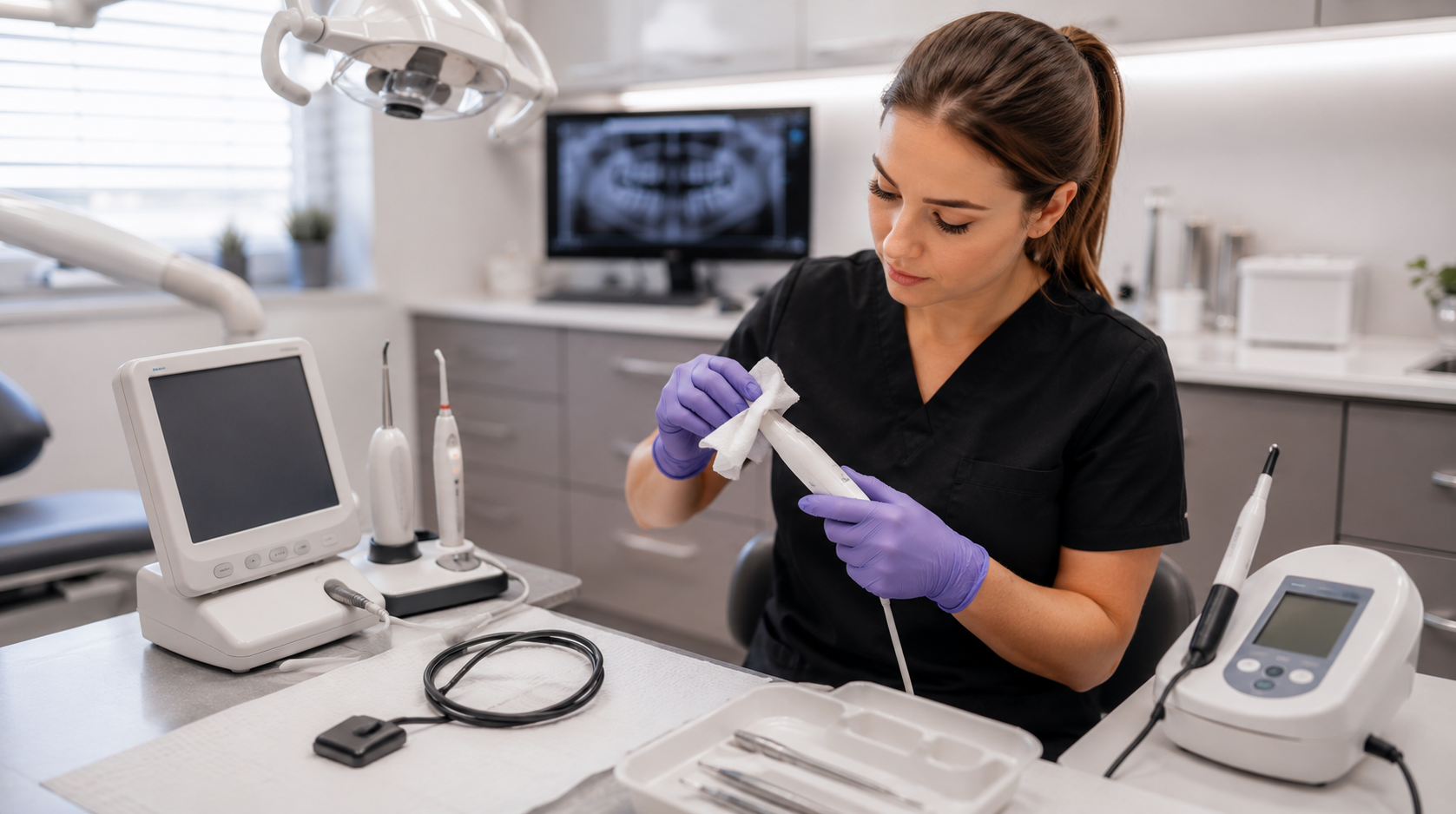
Digital Intraoral Scanners
Digital scanners are a major investment, and many young dentists are shocked by repair costs associated with scanner tips, calibration issues, or internal hardware damage.
Average Expected Lifespan: Typically 5–7 years before major upgrades, repairs, or replacement become likely. However, scanner tips and sleeves often have significantly shorter replacement intervals depending on manufacturer recommendations and sterilization cycles.
Common Causes of Premature Failure:
- Dropping the scanner wand
- Improper sterilization of scanner tips
- Slamming scanner carts into operatories
- Cord twisting or stretching
- Failure to calibrate routinely
- Improper storage between patients
Because scanners contain sensitive optical systems, even minor impact can affect accuracy.
Signs the Failure May Be Wear-and-Tear:
- Gradual slowing of scan speed
- Calibration drift over years
- Software compatibility limitations
- Aging batteries or charging systems
- Normal decline after thousands of scans
Signs Handling May Be Contributing:
- Visible cracks or chipped optics
- Scanner failures shortly after drops
- Repeated calibration errors from improper sterilization
- Broken charging ports
- Multiple damaged scanner tips in unusually short periods
Helpful Office Systems: A scanner should never feel like a “community item” with no ownership.
Successful offices often:
- Train one lead team member as scanner captain
- Maintain scanner-specific sterilization protocols
- Require calibration checks routinely
- Use protective holsters or docking stations
- Teach proper carrying techniques between rooms
Technology lasts longer when accountability and training exist together.
Diagnodent Devices
Diagnodent units are generally durable compared to sensors and scanners, but they are still precision instruments that require care.
Average Expected Lifespan: Often 7–10 years or longer with proper maintenance. Many offices continue using Diagnodent systems successfully for years if calibration and storage are handled properly.
Common Causes of Premature Failure:
- Dropping the handpiece
- Improper calibration
- Battery corrosion
- Damaged fiber-optic tips
- Moisture exposure
- Improper cleaning methods
Signs the Failure May Be Wear-and-Tear:
- Gradual calibration inconsistency over many years
- Aging battery systems
- Declining display function with age
- Reduced sensitivity after extensive use
Signs Handling May Be Contributing:
- Cracked handpieces
- Broken tips
- Moisture damage
- Inconsistent readings immediately after impact
- Frequent replacement due to physical damage
Helpful Office Systems: Even simple devices benefit from standardization.
Consider:
- Protective storage cases
- Assigned charging locations
- Scheduled calibration checks
- Team training on tip handling
- Preventive maintenance tracking
The Bigger Question: Is Your Team Trained… or Just Expected to Know?
One of the most common mistakes young dentists make is assuming dental assistants automatically know how to care for expensive technology simply because they have “worked in dentistry before.”
Every office handles equipment differently. Every doctor has different expectations. Every manufacturer has different protocols.
If a dentist has never clearly trained the team on:
- How to carry equipment
- How to disinfect it
- How to store it
- How to inspect it
- What damage looks like
…then equipment failure becomes a systems issue before it becomes a personnel issue.
The most successful dental practices create cultures where:
- Equipment is respected
- Protocols are standardized
- Accountability is clear
- Training is ongoing
When that happens, teams become protective of the equipment instead of fearful of breaking it.
Final Thoughts
Dental technology is expensive, but it is also heavily used every single day in challenging environments filled with moisture, movement, chemicals, heat, and patient variability.
Not every equipment failure means someone was careless. At the same time, repeated premature breakdowns often point toward gaps in systems, training, storage, or handling protocols.
Young dentists who understand the expected lifespan of their equipment can better determine:
- What is normal aging
- What is accidental damage
- What requires better systems
- Where additional team education may be needed
Sometimes the equipment is simply old. Sometimes it was mishandled. And sometimes the office never created the systems necessary to protect the investment in the first place.
Keep Reading: Recipe for a 40-Year Dentist–Dental Assistant Partnership