
By: Michael Eid
Missed Endo Made Simple Part 1? Check it out first here.
Once the canals are open and a size 10 can glide, you’re ready to start shaping. This phase is all about control, patency, and avoiding iatrogenic trauma.
Step 1: Confirm Working Length
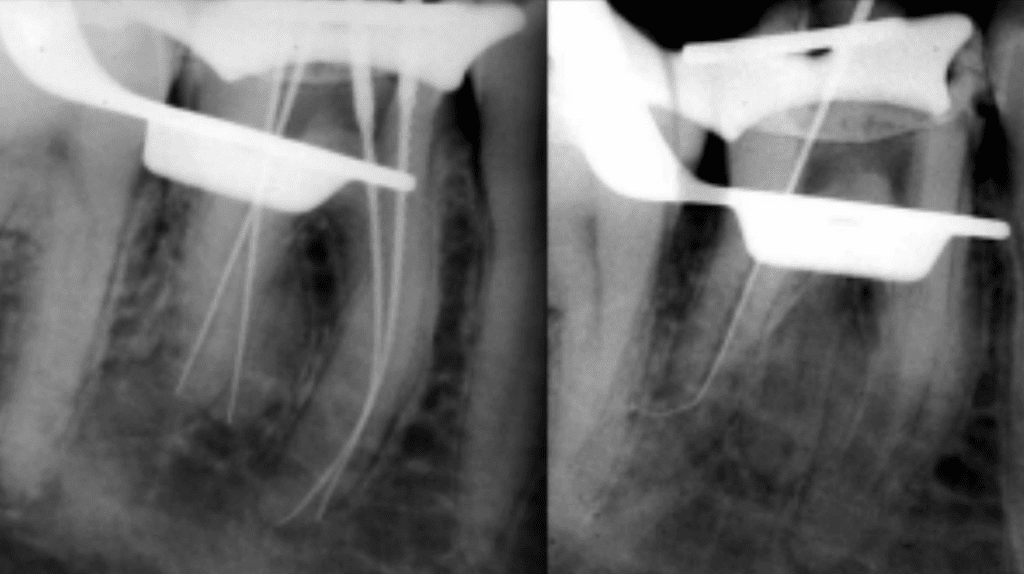
- Use a size 10 file with your apex locator.
- Get a stable, repeatable reading before anything else goes in.
🦷 High-Yield Tip: WL mistakes snowball into overfills, underfills, and blocked canals. Nail this first.
- If the tooth is going to receive a crown after the RCT, flatten the cusps completely out of occlusion.
- This allows an accurate reference point for your files and takes the tooth out of occlusion, reducing post-operative pain/sensitivity.
Step 2: Establish a Smooth Glide Path
Work your way: 10 → 15 → 20. Pre-curve every file. Use light watch-winding and gentle strokes.
🦷 High-Yield Tip: If a 10 can’t glide, nothing else will. Fix the path before you fight the canal.
- Don’t neglect orifice opener → the file can be constricted coronally if the orifice is not opened wide enough.
Step 3: Recapitulate Constantly
After every new file, drop back to the previous smaller one. This keeps the canal open and prevents debris from packing apically.
🦷 High-Yield Tip: Most student blockages and ledges come from skipping recapitulation.
Step 4: Irrigate Between Every File
- Flush with NaOCl frequently.
- Use EDTA every few files if the canal feels tight or “scratchy.”
🦷 High-Yield Tip: Files shape. Irrigation cleans. Don’t rely on files to do a fluid’s job.
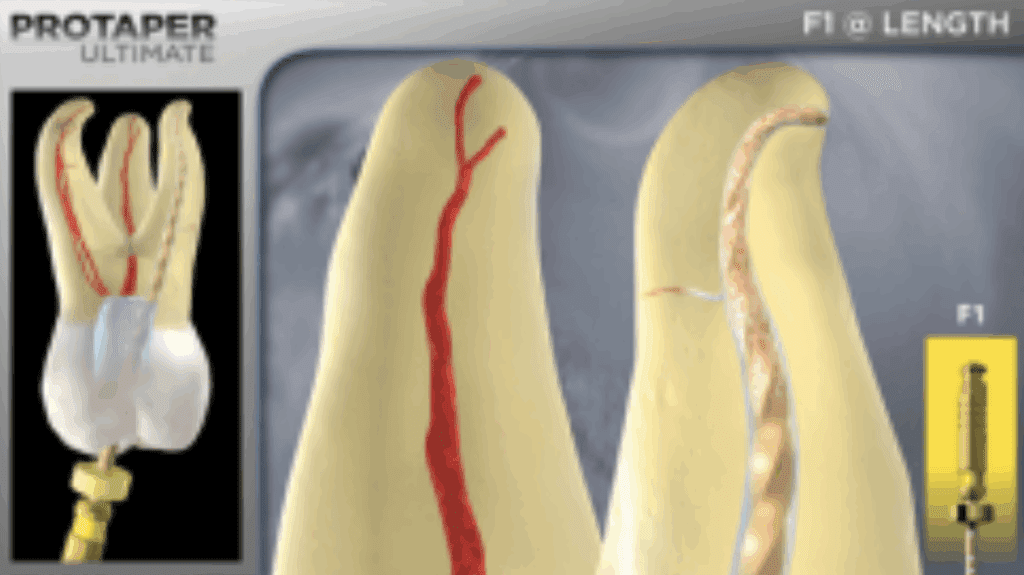
Step 5: Respect Canal Anatomy
- Pre-curve for curves.
- Use short, controlled strokes.
- If you feel resistance → stop, irrigate, recapitulate.
🦷 High-Yield Tip: Forcing a file is the fastest way to create a ledge or snap a rotary.
Step 6: Rotary Files
- Start with small tapers.
- Use gentle pecking — never push apically.
Visual Cue:
Watch the flutes.
- If they’re packed with dentin → that’s your sign to stop at that size.
- If you don’t feel the rotary engaging much and the flutes are clear → up a size on the rotary.
🦷 High-Yield Tip: Rotary breakage isn’t skill-related — it’s ignoring the flutes or pushing through resistance.