By: Ronda Holman
If you’re a young dentist, chances are you’ve looked at your schedule at some point and thought, there’s no way I’m finishing this on time. You start the day optimistic, and by mid-morning, you’re already running behind, skipping lunch, and mentally apologizing to every patient in the waiting room.
The truth? Time management in dentistry isn’t something you magically “get better at” just by working more. It’s a skill, and more importantly, it’s a system.
Here’s what actually works.
Stop Thinking “Faster”, Start Thinking “More Predictable”
Early on, most dentists focus on speed. But speed without consistency just creates stress. What you really want is predictability.
If your class II composite takes anywhere from 25 to 60 minutes, depending on the day, that’s the problem, not your raw speed. Start breaking procedures into steps and noticing where time fluctuates.
- Is it isolation?
- Matrix placement?
- Adjustments?
Once you identify the bottleneck, you can fix it. Predictable workflows beat rushed dentistry every time.
Set Up Like You Mean It & Simplify Your Armamentarium
A surprising amount of wasted time comes from poor setup. Missing instruments, wrong burs, or scrambling mid-procedure can easily add 10–15 minutes.
Before you start:
Pre-Procedure Checklist
- Visualize the entire procedure
- Confirm materials and armamentarium
- Anticipate what might go wrong
This is also where smart product choices make a real difference. Using Microcopy single-use burs eliminates the guesswork of “is this bur still sharp?” or hunting for the right one mid-prep. Everything you need is in one place, consistently sharp, and ready to go every single time.
Efficient dentists aren’t faster because they rush; they’re faster because they don’t have to stop.
Rethink Isolation: Fast, Effective, and Practical
Isolation is one of the biggest hidden time drains, especially when it doesn’t go smoothly.
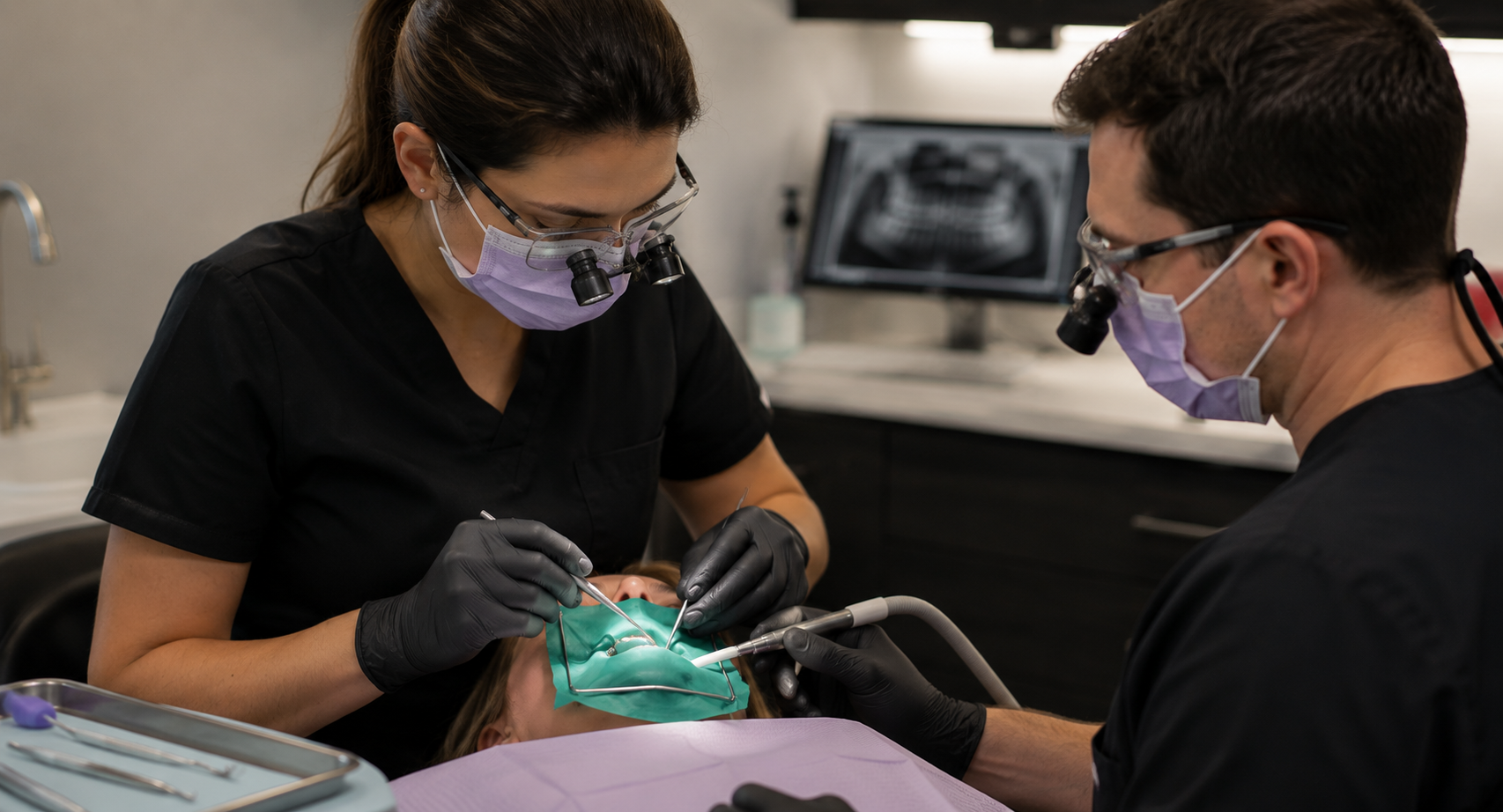
While a rubber dam is the gold standard, there are plenty of situations where quick, effective alternatives can keep you moving without sacrificing control. Tools like OptraGate can give you immediate access and retraction without the setup time, and pairing that with high-volume evacuation with relief creates a clean, workable field in seconds.
Improve access and visibility to shave minutes off your procedure while reducing frustration.
The goal isn’t to cut corners; it’s to choose the right level of isolation for the procedure in front of you.
Master Your Assistant Relationship
If you’re working with an assistant, your efficiency is directly tied to how well you function as a team.
Communication Best Practices
- Call out steps early (“I’ll need the sectional matrix next”)
- Use consistent sequencing so they can anticipate
- Debrief after procedures when things feel off
When your workflow is predictable, and your setup is standardized, your assistant can stay two steps ahead. That’s where real-time savings happen.
Use Tools That Actually Make Your Life Easier
Not all instruments are created equal when it comes to efficiency.
For example, using sculpting instruments like OptraSculpt can significantly reduce finishing and adjustment time for composites. Better adaptation during placement means less time chasing anatomy and occlusion at the end. Pre-op occlusal stamps are great for replicating existing anatomy for less bite adjustment post op.
Key Efficiency Principles by Tool Type
- Consistently sharp burs → faster, cleaner preps
- Better placement instruments → fewer voids and adjustments
- Thoughtful material choices → simpler protocols
Efficiency isn’t about doing more; it’s about needing to do less correction later.
Learn Your “Non-Negotiables”
Not every step in a procedure carries equal weight. Some things you can streamline; others you absolutely cannot compromise.
What You Can Streamline vs. What You Cannot
- You can simplify your polishing protocol
- You cannot rush isolation or bonding
Knowing the difference protects both your time and your outcomes. Ironically, dentists who cut corners often end up losing time fixing failures.
Use Time Blocks, Not Wishful Thinking
One of the biggest early-career mistakes is underestimating procedure times.
Instead of guessing, track yourself for a week:
- How long do your crown preps actually take?
- How long do your fillings really take from anesthesia to polish?
Then build your schedule based on reality, not aspiration.
As you improve, you can tighten those time blocks. But starting with unrealistic expectations just sets you up to run behind all day.
Have a Recovery Plan for When Things Go Sideways
Because they will.
The matrix won’t seat. The patient can’t get numb. The occlusion won’t settle. These moments derail your schedule, not because they happen, but because you don’t have a plan.
Recovery Strategies for Common Disruptions
- If anesthesia fails → switch techniques early
- If a procedure is running long → identify a logical stopping point
- If you’re behind → communicate early with your team and patients
Good time management isn’t about perfection, it’s about recovery.
Protect Your Mental Pace
Rushing doesn’t just affect your hands, it affects your decisions.
When you feel behind, you’re more likely to:
- Skip steps
- Second-guess yourself
- Make avoidable mistakes
Ironically, slowing down slightly can actually make you more efficient overall. Calm, deliberate dentistry tends to be cleaner, which means fewer adjustments, fewer remakes, and less wasted time.
Final Thoughts
Time management in the operatory isn’t about cramming more into your day—it’s about creating a workflow that’s consistent, controlled, and repeatable.
Using tools like OptraGate for quick isolation, Microcopy single-use burs to eliminate friction in your setup, and instruments like OptraSculpt to reduce finishing time are small changes—but they add up fast.
You don’t need to be the fastest dentist in the room. You need to be the one whose procedures run smoothly, whose team knows the plan, and whose patients feel like they’re in capable hands.
Speed will come. Systems come first.
Keep Reading: If They Understand It, They’ll Accept It