By: Lee Culp, CDT
This article originally appeared on PankeyGram.org. igniteDDS was granted permission to share with our readers.
The advancements in digital dentistry have redefined implantology, making it faster, more predictable, and highly precise. Traditional workflows relied heavily on physical impressions, wax-ups, and manual adjustments, often requiring multiple appointments and increasing the risk of inaccuracies.
Today, artificial intelligence (AI), digital scanning, stackable guides, and 3D printing have streamlined implant planning and execution—allowing for same-day restorations and better long-term outcomes.
The Advantage of Digital Dentistry in Implant Planning
One of the biggest transformations in implant dentistry is how implant planning and communication between clinicians and labs are done. We’ve never had communication like this before. Whether coordinating with a surgeon to optimize implant positioning or working with a restorative dentist on occlusion and esthetics, digital workflows ensure all stakeholders are on the same page before surgery even begins.
How AI Enhances Digital Implant Planning
AI in dentistry plays a major role in enhancing digital implant planning.
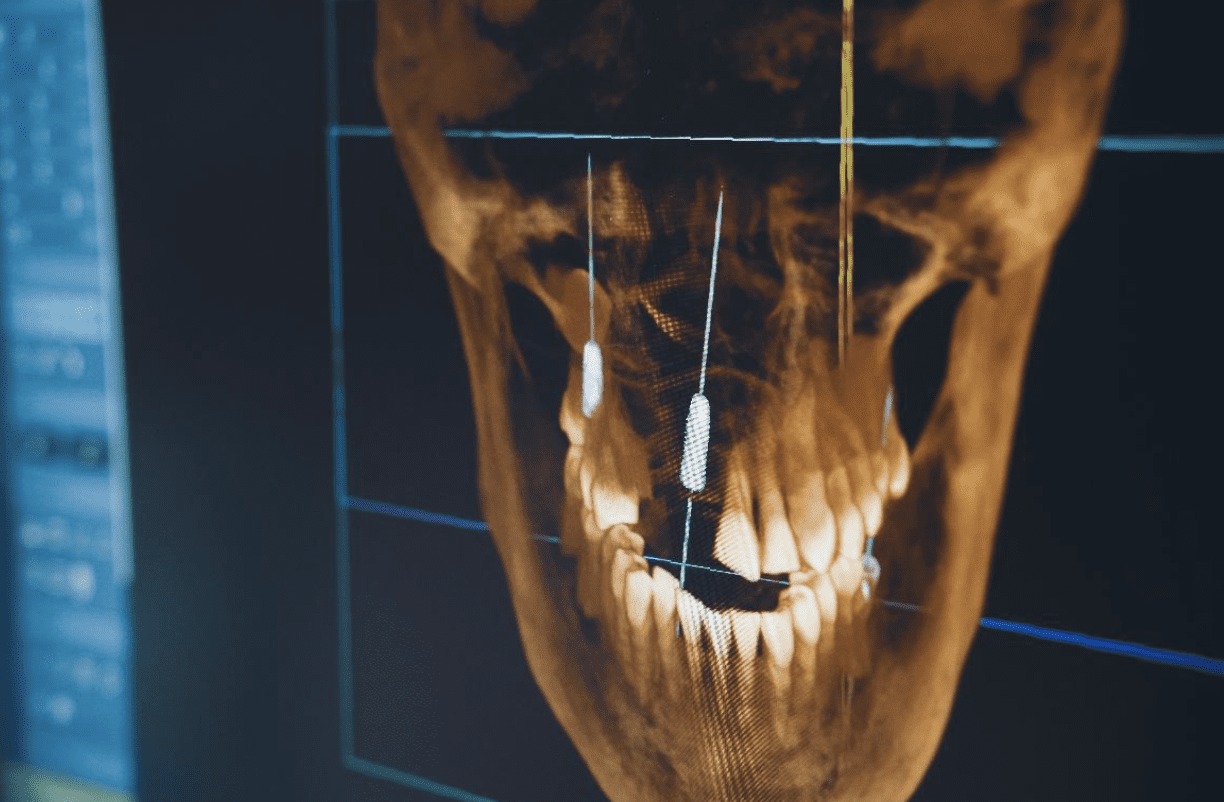
- We used to spend hours manually converting a CT scan into a clean STL file.
- The AI software now does it in about five minutes.
This allows for:
- Quick data processing
- Integration with intraoral scans
- Facial scans
- Digital articulators
- Creation of a fully realized virtual patient
The ability to move maxillary or mandibular structures digitally and visualize soft tissue changes enables more precise treatment planning.
Enhancing Precision in Implantology with Stackable Guides
One of the biggest advancements in digital implantology is the development of stackable guides. These guides allow for precise control over each stage of implant surgery, from bone reduction to implant placement and immediate loading.
We can get the teeth exactly where they need to be, which means we can get the implants exactly where they need to be.
With digital dentistry advancements, dental implant positioning is no longer dictated solely by bone availability but can be guided by the ideal prosthetic outcome. This ensures:
- Optimal function
- Esthetics
- Long-term stability
Digital Workflows for Fully Edentulous Cases
For fully edentulous cases, digital workflows enable a dual-scan technique using a patient’s existing denture as a reference.
- We double scan the denture.
- Extract the teeth digitally.
- Use that data to guide dental implant placement.
This eliminates the need for intraoral scans and allows for same-day temporization.
Immediate Provisionals
Traditionally, creating immediate temporaries required:
- Physical impressions
- Wax-ups
- Multiple lab visits
Today, digital dentistry eliminates those steps, allowing for chairside fabrication of temporary restorations within hours of surgery.
Two Design Approaches for Immediate Temporaries
There are two ways to design immediate temporaries:
- Quick approach (about 75% accurate)
- Uses digital dentistry tools to position teeth over preps
- Does not precisely mark margins
- More precise approach
- Involves detailed margin marking
- Ensures optimal adaptation to the prepared site
The Seamless Workflow
- The clinician scans the prepped teeth immediately after surgery.
- The lab designs the provisional and sends the file digitally.
- The clinician prints the temporary in-office, ensuring an immediate restoration that fits precisely over the dental implant site.
By maintaining the digital design throughout the process, adjustments are easily made without starting over—ensuring continuity and efficiency.
3D Printing and Robotic Manufacturing in Implant Dentistry
Robotic manufacturing, including both milling and 3D printing, has revolutionized the production of implant components.
Sixty percent of what we do in our laboratory today is printed.
This includes:
- Surgical guides
- Implant prosthetics
- Titanium and cobalt-chrome dental implant frameworks
While milling remains essential for certain applications, such as custom abutments, 3D printing has taken over many aspects of implant dentistry. The ability to print:
- Resins
- PMMA
- Metals
Allows for highly customized restorations without the time-consuming process of traditional casting and fabrication.
Custom Healing Abutments and Tissue Healing Guides
One of the most impactful applications of 3D printing in implantology is the production of custom healing abutments and tissue healing guides.
- Custom healing abutments can be made from titanium, PEEK, or acrylic.
- They are fabricated at the same time as the surgical guide and temporary.
This ensures that soft tissue healing is optimized from day one, reducing the need for extensive adjustments later.
The Role of Augmented Reality and AI in Implant Dentistry
As digital workflows continue to evolve, augmented reality (AR) is emerging as a valuable tool for implant planning and execution.
Some of the surgical software we’re working with now allows us to put on augmented reality glasses and work in a 3D space.
This has major implications for:
- Education
- Real-time surgical navigation
AI in dentistry is also playing a growing role in refining implant workflows, including:
- Optimizing occlusal forces in digital designs
- Predicting soft tissue behavior after surgery
- Enabling more precise and personalized treatment planning
Conclusion: The Future of Digital Implant Workflows
Using AI in dentistry for case analysis, stackable guides for precise implant placement, immediate temporization via 3D printing, and real-time lab-dentist collaboration, today’s implant workflows are more efficient and predictable than ever before.
This means restorative dentists can confidently perform more implant-related procedures without referring all cases to dental specialists. My partner at Cranham Culp Digital Dentistry, Dr. John Cranham, now performs simple dental implant cases using predictable digital workflows.
For dentists looking to improve their practice workflows, the key is simple:
Embrace Digital Collaboration
Digital Mastery, an advanced hands-on course with Dr. John Cranham and me, is tailored to help you implement in your practice everything you learn.