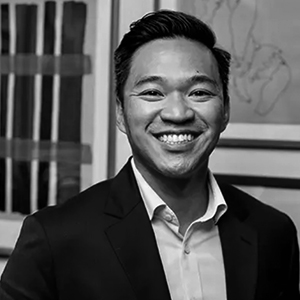
By: John C. Cranham, DDS
This topic originally appeared on Pankey.org. Dr. Cranham granted permission for igniteDDS to share with our readers.
My professional journey in dentistry has been deeply influenced by my time in the Pankey Institute and other continuing education courses. My early career focused on integrating cosmetic digital dentistry with sound occlusal concepts. When I first encountered digital dentistry in 2000, I envisioned its potential beyond chairside dental crowns. I wanted to replicate the planning and mounting of models, just as we did in the analog world, but with enhanced precision and efficiency.
The real breakthrough came in 2017 when Lee Culp and I realized we had the tools to make this vision a reality.
Balancing Timeless Principles with Digital Execution
The primary challenge in implementing digital workflows lies in maintaining a balance between timeless principles—aesthetics, occlusion, and biological health—and the effective execution of digital protocols. This is the core focus of our work and teaching.
Every dentist should have clear goals in these four critical areas:
- Esthetics: Understanding tooth placement, incisal edge position, gingival heights, and proportions.
- Occlusion: Defining and applying sound occlusal principles.
- Biological Health: Ensuring restoration cleansability, healthy probing depths, and overall tissue health.
- Structure: Making informed decisions about dental crowns, fillings, implants, and post-and-core procedures.
My training has been invaluable in clarifying these principles. However, the most vital skill is the ability to visualize the desired outcome and develop efficient workflows to achieve it.
A Case of Severe Worn Dentition, Breakdown, Erosion, and Fractures
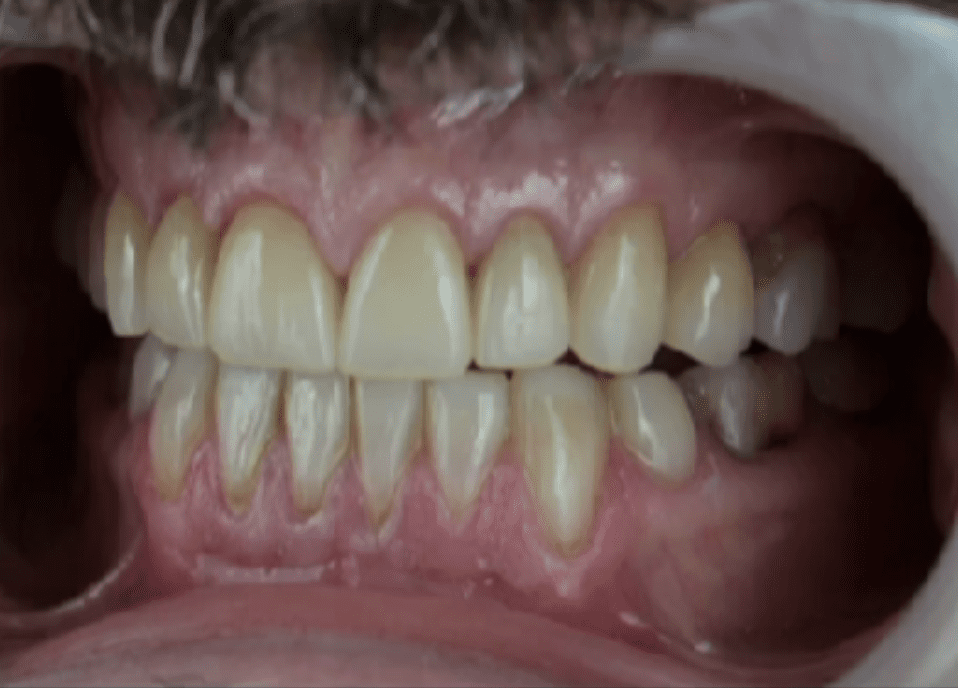
A 53-year-old patient came into my clinic with type 1 diabetes, thyroid disease, high blood pressure, and sleep apnea. He had severe worn dentition, breakdown, erosion, and fractures. He was referred to the practice for all-on-x treatment.
He is a minister and wanted a beautiful smile, but all-on-x treatment was incompatible with his financial means. I was challenged with planning alternative treatment and phasing his dentistry to make it initially affordable. I am of the opinion that the alternative plan he and I developed together is better than all-on-x treatment would have been, even if he could have financed it.
Initial Assessment
In our initial assessment of his case, facial analysis revealed potential jaw retrusion and overclosure. A STOP-BANK analysis indicated a high risk for sleep apnea, confirming his existing CPAP use. Our periodontal assessment showed localized periodontitis and moderate, generalized gingivitis. Our dental examination found that, despite significant wear and breakdown, his teeth were restorable.
Treatment Planning and a Beautiful Smile Design
Smile design focused on lengthening teeth and improving curvature. Vertical dimension opening was planned to create space for restoration and overjet/overbite correction. Crown lengthening was planned to expose more tooth structure and achieve the ferrule effect. Digital scans were taken in MI and CR using a leaf gauge. Then, the scans were virtually mounted for precise analysis and planning with digital dentistry tools.
For digital mounting, we used 3D software like 3Shape, Exocad, and RealGuide—all of which leverage Bonwill’s point principle for accurate articulation. The virtual articulator is perfect for complex smile design. It allowed us to analyze occlusion, identify interferences, and plan for optimal function. The ability to see the change in the jaw position from MI to CR was critical in the planning process.
The ability to mount scans virtually in minutes, without the need for stone models, has been a significant change from the analog smile design process. This process allows us to precisely position the incisal edge and analyze occlusion with unprecedented accuracy.
Phase 1: Biological and Functional Stabilization
Digital dentistry has shortened the treatment time for our patients. After our initial analysis and digital design, we immediately moved forward with Brian’s phased treatment plan.
- Step 1: Our first step was to address his periodontal health and biologically stabilize his teeth. To establish biological stability, we performed four quadrants of scaling and root planing, followed by crown lengthening on teeth 7-10.
- Step 2: After periodontal treatment and healing, Class V lesions were addressed, and initial buildups were planned for the prep appointment.
- Step 3: At the prep appointment, we bonded teeth 21-28 using injection molding techniques. We prepared teeth 5-12 with buildups. Then, we placed printed toppers on teeth 2, 3, 14, and 15 to open the vertical dimension and establish the planned occlusal plane.
Phase 2: Provisional Restorations
One of the most powerful aspects of our digital workflow is the ability to create precise, predictable provisionals.
- Step 1: We used the digital design to print a model, which served as a guide for our provisional restorations. Scans were sent to the lab, where Lee Culp’s team superimposed our wax-up smile design over the prepped teeth. The margins were connected, and an SCL file was sent back for printing.
- Step 2: Within an hour, we had a perfectly fitting, strong resin-ceramic provisionals to place in Brian’s mouth.
- Step 3: After evaluating the provisionals, we made necessary adjustments to ensure optimal aesthetics and function. We noted a slight lingual positioning of the provisionals and planned to increase the overjet for better guidance. After adjustments and occlusal equilibration, we scanned the provisionals and sent them to the lab with detailed instructions and photographs.
Phase 3: Final Restorations
- Step 1: The lab superimposed the adjusted provisional scan over the prep and initial design files. This allowed for precise replication and refinement of the desired contours and occlusion.
- Step 2: Joel at Sculpture Studios fabricated the final restorations using Ivoclar Z Prime, a gradient zirconia material. Staining and glazing techniques were used to achieve natural aesthetics. Resin was blended on the facial of the lower restorations for improved color matching.
- Step 3: When the zirconia restorations were placed in Brian’s mouth, final scans confirmed equal intensity contacts and smooth excursions, with no rubbing of posterior teeth.

Financial Considerations
Brian’s treatment was carefully phased to accommodate his needs and budget. The initial phase, including periodontal treatment, bonding, and provisionals, was completed over approximately 14 hours. Future phases will include grafting, additional dental crowns, and restoration of the lower incisors.
We provided a detailed breakdown of costs, including records gathering, in-house design fees, per-unit dental crown fees, provisional fees, bonding fees, and orthotic fees. A specialty fee was added for time and judgment, with a discount applied due to Brian’s role as a pastor.
The Importance of Foundational Principles in Integrating Digital Workflows
Brian’s case highlights the critical importance of integrating digital workflows with fundamental dental principles. We considered aesthetic factors, such as incisal edge position and gingival plane, as well as biological health, occlusal function, and structural integrity. Understanding centric relation, anterior guidance, and the envelope of function was essential for achieving a stable and predictable outcome.
Why Embrace Digital Workflows?
Digital workflows offer numerous advantages:
- Enhanced precision and accuracy.
- Improved efficiency and speed.
- Better visualization and treatment planning.
- Increased patient communication and education.
- Ability to apply foundational principles in a more predictable manner.
This year I became Digital Curriculum Coordinator at The Pankey Institute, and I am teaching the Digital Mastery: A 1-Year Online Residency together with Lee Culp, CDT, where participants learn to tackle complex cases using state-of-the-art digital workflows.
For a fuller discussion of this clinical case utilizing digital workflow, watch this YouTube video.