The clinical case for implants is usually straightforward. The psychological case — getting the patient to feel ready — is where most of us were never formally trained.
Understanding a few principles from behavioral psychology won’t turn you into a therapist, but it will make you a noticeably better communicator. And in implant consultations, communication is everything.
People make decisions emotionally and justify them rationally.
This is well-documented and directly relevant to how we present treatment. If you lead with clinical rationale — bone loss percentages, adjacent tooth migration, occlusal collapse — you’re speaking to the rational mind first.
The rational mind is skeptical, slow, and easily overwhelmed. If you lead with the patient’s experience — how they feel eating, what they avoid, what they wish were different — you’re speaking to the emotional mind first.
The emotional mind moves faster and drives decisions. The clinical rationale becomes the confirmation, not the catalyst.
Loss aversion is more powerful than gain motivation.
People work harder to avoid losing something than to gain something of equal value. This is called loss aversion, and it’s highly relevant to implant presentations.
- “An implant will give you a beautiful smile” is a gain frame.
- “Every month without an implant, you’re losing bone that may be difficult or impossible to replace later” is a loss frame.
Both are true. The second one tends to move patients more. Use it ethically — not to frighten, but to honestly communicate the cost of inaction.
Autonomy matters more than most dentists realize.
When patients feel like they’re being told what to do, resistance goes up — even if they know it’s the right thing. When they feel like they’re making an informed choice, engagement goes up.
Something as simple as:
“What questions do you have before we talk about options?” or “what’s most important to you in how we approach this?” signals respect for their autonomy.
That respect is disarming in the best way.
The consultation environment sends a message before you say a word.
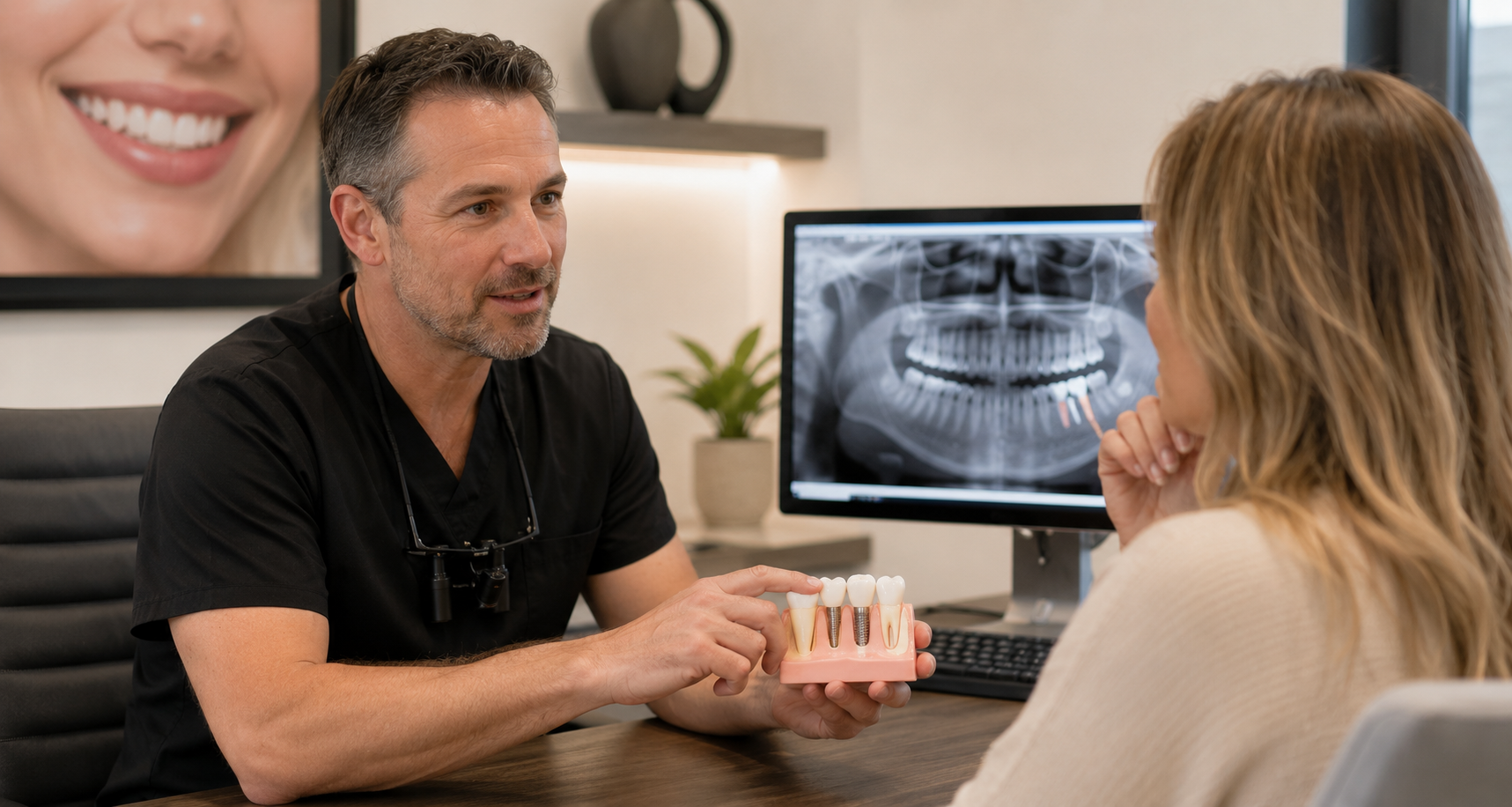
Is the room calm or rushed? Are you sitting or standing when you talk to them? Do they feel like you have time for them? Patients form impressions before the conversation begins, and those impressions color everything that follows. If a patient feels like they’re on a conveyor belt, no amount of good scripting will fully overcome that.
Slow down. Sit down. Make the environment support the conversation you’re trying to have.
Follow-up is a psychological tool, not just a logistics task.
Most patients who say “I need to think about it” haven’t actually thought about it — they’ve just had time to let the anxiety settle. A well-timed follow-up call that genuinely asks how they’re feeling, answers a lingering question, and reaffirms that you’re there when they’re ready does more for case acceptance than most of us give it credit for. It also communicates that you care about their outcome, not just the case.
The best implant clinicians aren’t just technically excellent. They’re students of the patient experience. That’s the part of the consultation that matters most.