By: Ronda Holman
Screening for sleep-related breathing disorders is within your scope. Diagnosing them is not. The whole game is working that line with precision.
You see the airway before anyone else does. Not the sleep physician, not the ENT, not the cardiologist managing the hypertension that a collapsing airway helped create. You — every six months, with a light and a mirror, looking at the exact anatomy where obstructive sleep apnea lives.
The American Dental Association noticed. In 2017 its House of Delegates adopted a policy titled The Role of Dentistry in the Treatment of Sleep-Related Breathing Disorders (Resolution 17H-2017), and it opened with a line worth memorizing: dentists are encouraged to screen patients for sleep-related breathing disorders as part of a comprehensive medical and dental history.
That word — encouraged — is doing quiet work. It isn’t “may.” Once a national association puts screening in writing, plaintiff’s attorneys read it too, and “standard of care” starts to shift underneath you. Not screening is becoming the exposure. But so is the opposite mistake, which I’ll get to, because new dentists tend to fall off the horse on both sides.
What the ADA Actually Asks of You
Read the policy narrowly and it’s clean. Screen through history and exam. Recognize symptoms — daytime sleepiness, snoring, witnessed apneas, choking or gasping arousals — and risk factors like obesity, retrognathia, and hypertension. In children, look for signs of deficient growth and development. Then, if risk is present, refer to the appropriate physician for diagnosis.
Notice what is not on that list. You do not diagnose. Diagnosis of OSA is a medical act requiring a physician’s interpretation of a sleep study — an in-lab polysomnogram or a properly ordered home sleep apnea test. The ADA policy pointedly does not authorize dentists to dispense home testing for diagnostic purposes. You screen; medicine diagnoses; you treat what you’re licensed to treat — oral appliance therapy, with a physician’s prescription, for the right candidate. Blur those roles and you’ve traded a referral relationship for a liability.
What Screening Looks Like With Your Gloves On
Two tracks: history and exam.
History is where validated tools earn their keep. The STOP-BANG questionnaire and the Epworth Sleepiness Scale are quick, published, and defensible — put them on your intake, not in your memory. Build one questionnaire for adults and a separate one for children, because the pediatric signal is completely different.
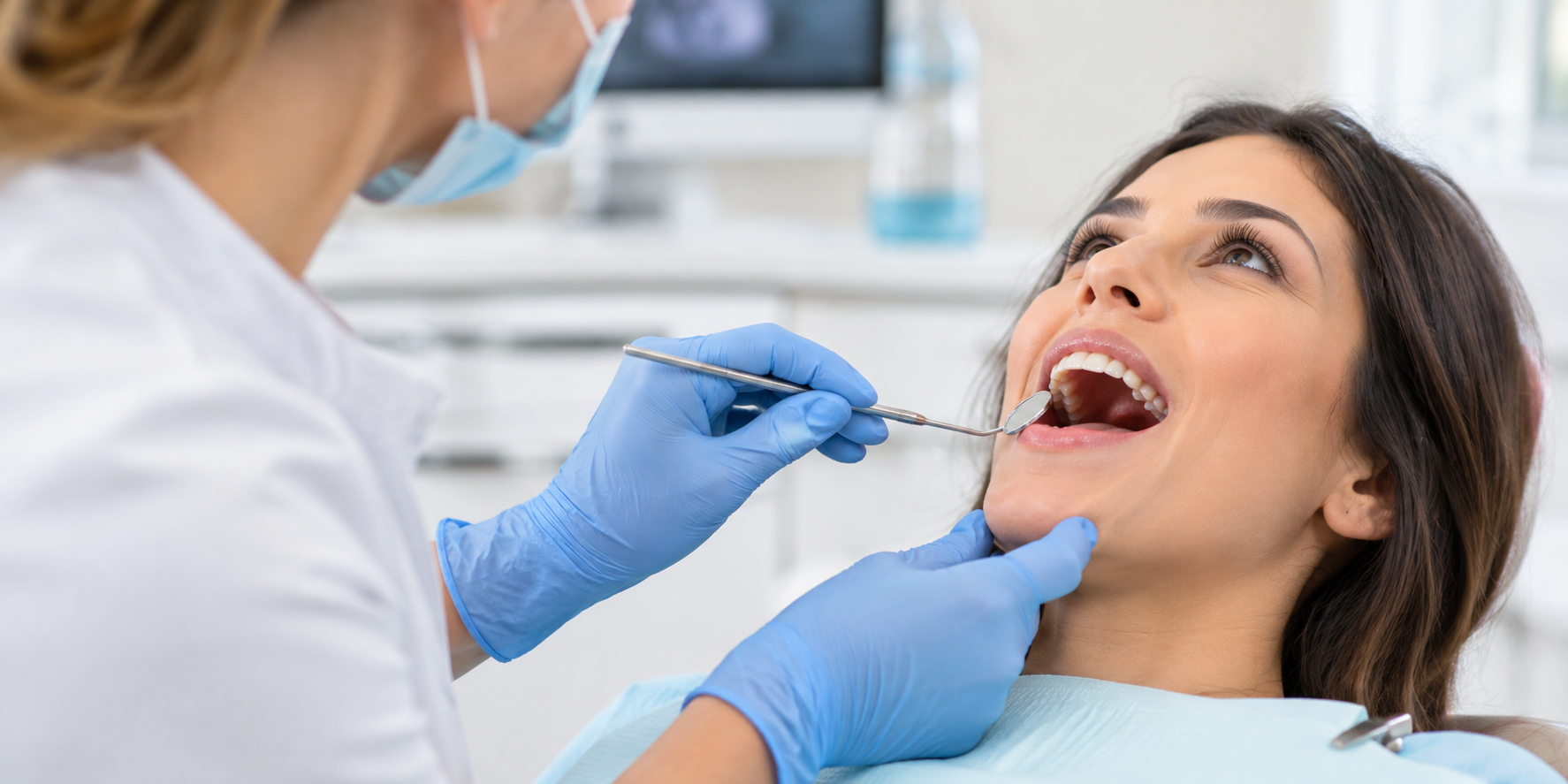
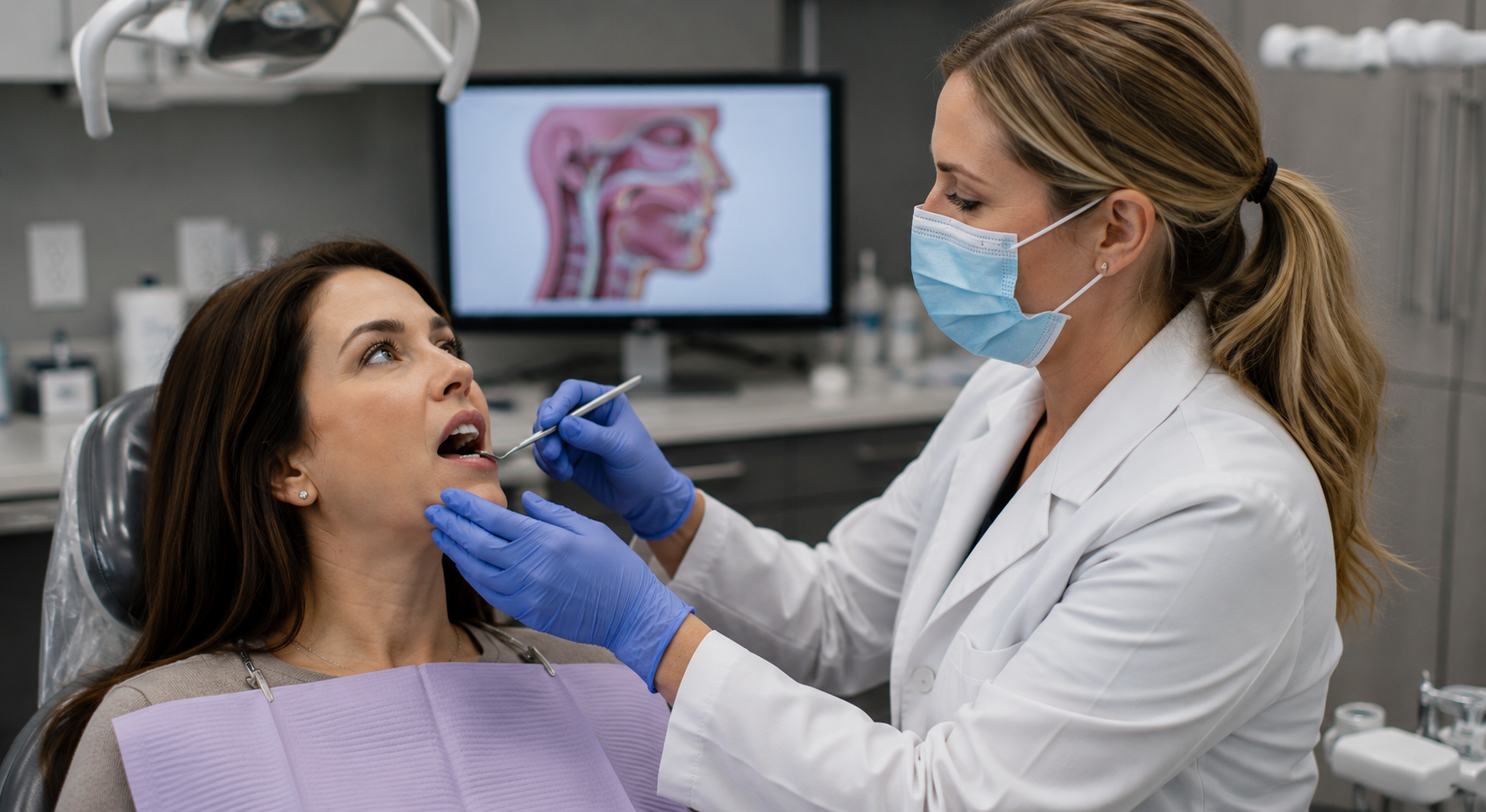
The exam is where dentistry has an unfair advantage. Retrognathia and a high, narrow palatal vault. A low, posteriorly positioned tongue and a Mallampati or Friedman class that hides the oropharynx. Scalloped lateral tongue borders and buccal ridging from a tongue with nowhere to rest. Tonsillar hypertrophy. In kids: mouth breathing, chronic congestion, a restrictive lingual frenum limiting elevation, crowding, open bite, and the behavioral tells — poor concentration, bedwetting, “hyperactivity” that gets medicated instead of investigated. None of these prove disease. All of them raise your index of suspicion enough to act.
Oral motor and myofunctional dysfunction belong in this same exam. A tongue that rests on the floor of the mouth, an incompetent lip seal, an anterior tongue posture at rest, habitual mouth breathing — these are motor patterns you can observe, and they cluster with the very anatomy that predisposes an airway to collapse. Just be disciplined about how you describe them.
The Moment You Tell the Patient
This is the sentence most new dentists get wrong. Do not say “you have sleep apnea.” You don’t know that, you can’t know that, and the chart will remember you said it. Say something you can defend:
“I’m seeing several signs in your mouth and airway, along with what you’ve told me, that put you at higher risk for a sleep-breathing problem. That’s outside what I can diagnose — but I’d like to connect you with a physician who can. This matters for more than your teeth.”
That’s honest, it’s within scope, and it does the one thing chairside manner is actually for: it moves a patient from mild alarm to a concrete next step without you overselling. You aren’t delivering a verdict. You’re opening a door and walking them through it.
Next Steps: Build the Referral Loop Before You Need It
A referral is only as good as the physician on the other end. The ADA policy explicitly tells you to establish protocols and agreements with referring physicians that spell out who owns testing, diagnosis, and treatment. Do that work early. Line up a sleep physician, an ENT, and — for pediatric growth-and-development cases — an orthodontist and a myofunctional therapist you actually trust.
When the diagnosis comes back and OSA is confirmed, the sequence is not optional: obtain a written prescription before you fabricate anything, get real informed consent that covers alternatives (CPAP, positional therapy, surgery) and appliance side effects, then communicate progress back to the referring physician. That last loop — closing back to medicine — is what makes you a colleague instead of a vendor.
Where does myofunctional therapy fit? Honestly, and no bigger than the evidence allows. The most-cited meta-analysis (Camacho et al., 2015) reported roughly a 50% reduction in apnea-hypopnea index in adults and about 62% in children with myofunctional therapy — a real, reproducible effect, but drawn from small, heterogeneous trials and demonstrated as an adjunct, not a cure for moderate-to-severe disease. Offer it as one lane in a multidisciplinary plan. Don’t let it become a claim you can’t cash.
Turning the Referral Into an In-House Asset
There’s a version of this where the myofunctional piece never leaves your building. Orofacial myofunctional therapy isn’t a licensed dental procedure — it’s a training-based competency, and your hygienist is already the person in the practice most fluent in tongue posture, frenum anatomy, and behavioral coaching at the chair.
Certificate pathways (through organizations like the Academy of Orofacial Myofunctional Therapy or the International Association of Orofacial Myology) can credential an RDH to deliver structured therapy programs, and because OMT is typically cash-pay and program-based rather than insurance-driven, it becomes a margin line most hygiene departments don’t have. Be honest about the constraints before you build the pro forma: scope of practice for who may provide and bill for OMT varies by state, so verify your board’s position first; the evidence still supports OMT as an adjunct within a diagnosed, multidisciplinary plan, not a standalone treatment you market as a cure; and a hygienist splitting time between prophys and therapy needs real schedule protection or the new service quietly starves. Done cleanly, though, this keeps the patient, the outcome, and the revenue inside the practice you’re trying to build — and it gives a hygienist a genuine career lane instead of a heavier chair.
The Self-Determined Part
Here’s why this belongs in your career, not just your chart notes. Airway screening is one of the few areas where a general dentist genuinely leads patient care rather than processing it — first responder and quarterback of a referral network. That’s clinically meaningful, and it builds a practice that doesn’t look like everyone else’s.
But the whole thing rests on precision. Screen aggressively. Diagnose never. Refer deliberately. Speak in language a physician, a patient, and — if it ever comes to it — an attorney would all find defensible. Do that, and you’re not just checking a box the ADA added in 2017. You’re building the kind of practice you actually chose.
Keep Reading: How Long Should It Last? Is Your Team Breaking Your Equipment or Is It Breaking on Its Own?